

I'm Barbara Jennings, REALTOR® with eXp Realty, and before you sign the builder's contract, remember that your buyer's agent reviews the contract and addenda with you first so you know exactly what you're committing to.
The short answer is yes: you want your own realtor on your side when you buy a new construction home in Virginia. The builder's on-site sales representative is friendly, knowledgeable, and skilled at what they do, but they work for the builder, not for you. This guide explains the difference, walks through everything a buyer's agent does from contract to closing, and answers the questions I hear most often from buyers touring communities across Fredericksburg, Stafford, and Northern Virginia.
If you have been researching new homes in our region, you have probably wondered whether an agent is really necessary, especially when the builder's sales team seems so helpful. It is one of the most important decisions you can make before you ever sign anything, because it shapes everything that follows: the contract, the addenda, the inspections, the design center, the build timeline, and closing day. Let me walk you through it.
The Builder's On-Site Sales Rep Works for the Builder
Here is the fact that surprises most buyers: the person greeting you at the model home does not represent you. Builder sales representatives are excellent at their jobs, they know the floor plans and pricing inside and out, and they genuinely want you to be happy with your new home. But their employer is the builder, and their job is to sell homes on the builder's terms. They cannot advise you on whether a contract clause is fair to you, whether an incentive should be stronger, or whether this community is the right financial fit for your family.
Your buyer's agent, by contrast, has a fiduciary duty to you. That is a legal obligation to act in your best interest, not the builder's. When you bring your own agent to a new construction purchase, you have a licensed professional whose only job is to protect your interests through every stage of the transaction.
Builder's Sales Rep vs. Your Buyer's Agent
The Builder's On-Site Sales Rep
- • Works for the builder and is paid by the builder
- • Knows the floor plans, upgrades, and pricing inside out
- • Cannot advise you on contract fairness or negotiation strategy
- • Represents one community, not your whole set of options
- • Is not looking out for your budget, timeline, or long-term goals
Your Buyer's Agent
- ✓ Works for you, with a fiduciary duty to protect your interests
- ✓ Reviews the builder's contract and flags one-sided terms
- ✓ Negotiates incentives, upgrades, and terms on your behalf
- ✓ Coordinates inspections and tracks construction milestones
- ✓ Helps you compare builders and communities impartially
- ✓ Stays with you through the design center, walk-throughs, and closing
What Does a Buyer's Agent Do at Every Stage of a New Build?
A buyer's agent's job does not end when you go under contract. In many ways, that is where the real work begins. New construction is a long process, and someone needs to watch out for your interests at every step. Here is what I do for my buyers from contract to closing.
1 Contract Review and Addenda
Builder contracts are written by the builder's legal team to protect the builder. They are dense, and they are full of addenda that can bury important details: escalation clauses, timeline language, deposit terms, what happens if financing changes, and what the builder can and cannot change before closing. Your agent reads every line, explains what it means, and negotiates changes that protect you before you sign.
2 Independent Inspections
The builder's own quality control inspections serve the builder, not you. Independent third-party inspectors perform a pre-drywall inspection, checking the framing, electrical, plumbing, and HVAC before the walls close up, plus a thorough final inspection before closing. Issues found on paper are far cheaper than issues found after move-in, and your agent coordinates the schedule and reviews the reports with you. Our full guide has more detail on what to look for at each inspection stage.
3 Design Center Guidance
The design center is where buyers make dozens of decisions under time pressure, and it is also where budgets climb quickly. Your agent helps you separate upgrades that add lasting value from upgrades that simply look nice in the showroom, and keeps the conversation anchored to your budget and your resale goals. See our design center guide for what to upgrade and what to skip.
4 Timeline and Milestone Monitoring
From the foundation pour to framing to drywall, a new home passes through many milestones before closing. Your agent tracks the schedule, visits the site at key stages, takes photos, and flags concerns early, when they are easier and cheaper to fix. If your closing date slips, your agent works with the builder on your behalf so you are not left scrambling. Learn more about what happens from contract to keys.
5 Walk-Throughs and Punch List
The final walk-through is your last chance to catch problems before you take ownership. Your agent walks the home with you, checks that every agreed-upon upgrade is installed, and documents anything unfinished or damaged on a punch list. If the builder has not completed promised work, your agent follows up so you are not left chasing fixes after move-in.
6 Closing Coordination
Closing day brings final numbers, final documents, and often last-minute questions. Your agent reviews the closing statement, works with the lender and the settlement company, and makes sure everything matches what you agreed to. Financing for a new build has its own quirks, so see our financing guide for how it all fits together.
How Representation Protects You From Overlooked Issues and Costly Mistakes
The most expensive mistakes in new construction are usually the quiet ones: a clause that shifts risk to you, an incentive that disappears when you change lenders, an inspection that never happens, or a design center decision made under pressure. None of these are anyone's fault exactly, they are just the natural result of a process where the builder has experienced professionals on their side and you have been going it alone.
Your agent is the experienced professional on your side. They have seen dozens of builder contracts and know which terms are standard and which ones deserve a closer look. They know which upgrades hold their value and which ones buyers rarely recoup. They know what to check at the pre-drywall stage and what belongs on a final punch list. That knowledge turns overlooked issues into resolved issues, and it turns costly mistakes into questions that get asked before you sign.
One Rule Can Save Your Representation
Builders almost always require your buyer's agent to be registered on your very first visit. Tour a community on your own and leave your contact information, and many builders will treat you as an unrepresented buyer and decline to work with your agent later. Reach out to Barbara before you visit any community, not after.
Who Pays the Buyer's Agent When You Buy New Construction?
This is the question buyers ask more than any other, and the answer is usually good news. In many new construction transactions, the builder pays the buyer's agent's compensation at closing, which means representation often costs you nothing out of pocket. The builder accounts for that cost in their marketing budget, and the price of the home does not go up because you have an agent.
Because compensation arrangements can vary by builder, community, and program, I always encourage buyers to confirm the details with me before signing anything. I walk every client through how compensation works in their specific transaction, so there are no surprises at closing. The point is simple: you are not choosing between having an agent and getting a better price. You are choosing whether someone with professional experience is negotiating for you.
Should You Walk Into a Model Home Without an Agent?
If you want representation, the answer is no. The smartest move is to connect with your agent before your first tour so you are registered as a represented buyer from the moment you walk in. Touring a few communities is a great way to compare builders and floor plans, and your agent can help you do that with a buyer's checklist for model home tours.
Whether you are looking at new communities in Stafford, Spotsylvania, Prince William County, Fairfax, or Orange County, the advice is the same: register your agent before you tour, and let their experience work for you from day one. If you have already visited a community without an agent, it may not be too late, especially if you did not sign in or leave contact information. Ask Barbara to check with the builder's sales office, because every situation is different.
For a deeper look at the registration rules, buyer agency agreements, and negotiation strategies, my companion article on why you need a buyer's agent for new construction in Virginia walks through it in even more detail.
Frequently Asked Questions
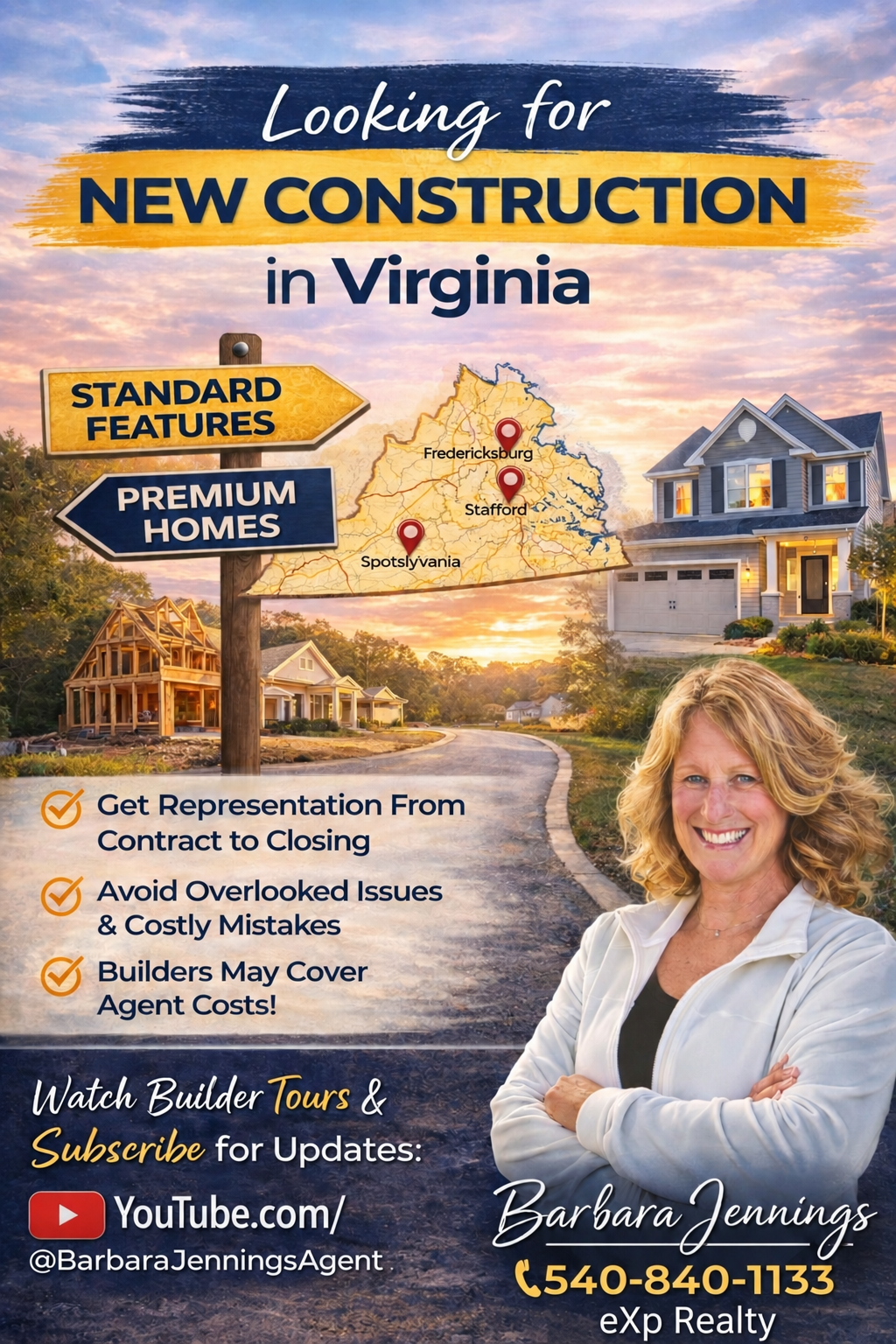
Before You Visit a New Construction Community, Let's Talk
I help buyers across Fredericksburg, Stafford, Spotsylvania, Orange, Fairfax, and Prince William County get represented from their very first tour through closing day. Call me or schedule a consultation before you walk into any model home.
When Barbara isn't helping families find their new construction home in Virginia, she's sharing the latest insights on builders, communities, and the buying process across the Fredericksburg region. Learn more at barbara-jennings.com.

Barbara Jennings
REALTOR® · eXp Realty · New Construction Specialist
Barbara Jennings is a licensed Virginia REALTOR® with eXp Realty, specializing in new construction, builder negotiations, and the Fredericksburg-area market. With her proven 100-point Marketing Plan and advanced AI-driven strategies, she helps buyers find the right home at the right price and save thousands in the process. Barbara serves Fredericksburg, Stafford, Spotsylvania, Orange, Fairfax, Prince William County, and beyond.