
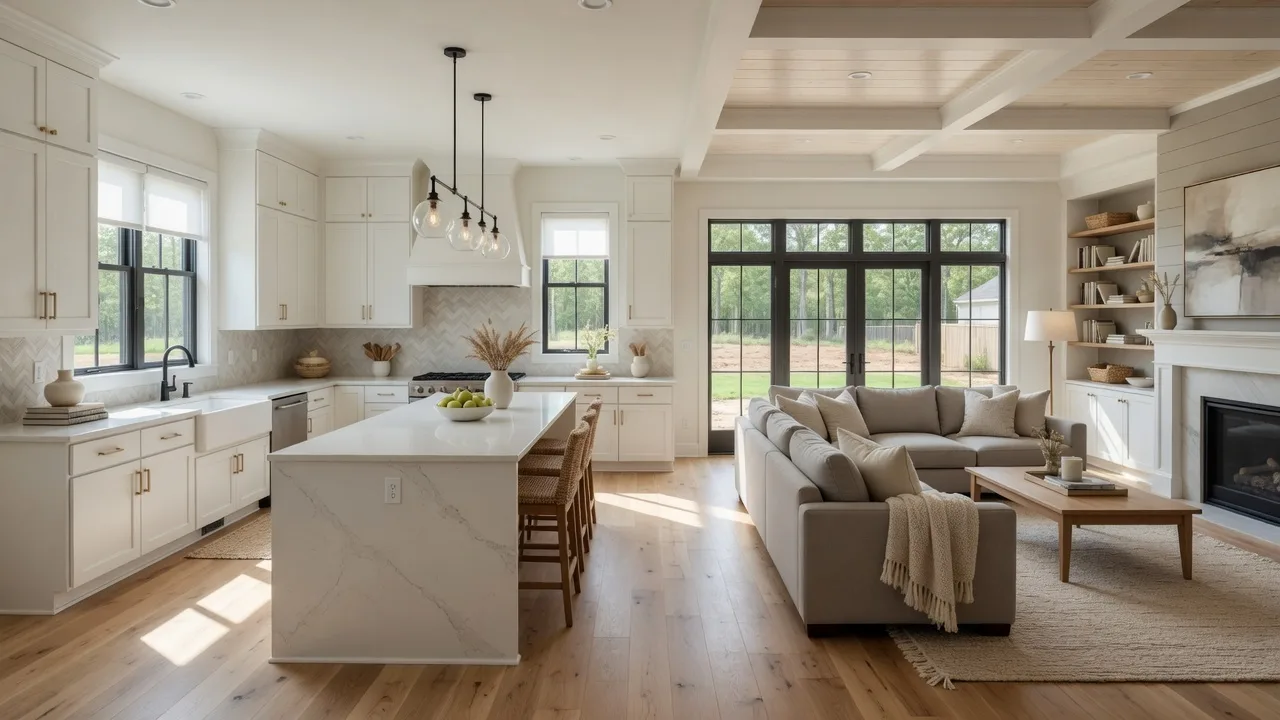
Low-down-payment programs exist for new construction buyers, and I'm Barbara Jennings, REALTOR® with eXp Realty, ready to walk you through your options, just call (540) 840-1133.
If you've been thinking about buying a new construction home in the Fredericksburg, Stafford, or Spotsylvania area, you already know the appeal — modern floor plans, energy-efficient systems, builder warranties, and the excitement of being the first person to call a house "home." But there's one part of the new construction process that trips up a lot of buyers: financing. The way you finance a new build is different from a standard home purchase, and understanding those differences before you walk into the builder's sales office can save you time, money, and a whole lot of stress.
Whether you're a first-time buyer exploring FHA options, a veteran looking into VA construction loans, or a move-up buyer comparing conventional programs, this guide breaks down every major financing path available for new construction in Virginia — what each one requires, how the timeline works, and which option might be the best fit for your situation.
What Is a Construction Loan and How Is It Different?
A construction loan is a short-term loan used to finance the building of a home. Unlike a traditional mortgage — where you borrow a lump sum and start paying it back immediately — a construction loan typically funds in draws (staged payments) as the builder reaches specific milestones: foundation, framing, rough-in, drywall, and completion. During the build phase, you usually only pay interest on the amount that's been drawn, which keeps your monthly costs manageable while construction is underway.
Once the home is complete, the construction loan either converts into a permanent mortgage (in the case of a one-time close loan) or must be paid off by a separate permanent loan (in a two-time close structure). For most buyers in the Fredericksburg area, the one-time close option is simpler, less expensive, and more common — especially when working with a national production builder like Ryan Homes, D.R. Horton, or Lennar.
The One-Time Close Loan: The Most Popular Option
A one-time close (OTC) construction-to-permanent loan is exactly what it sounds like: one application, one closing, one set of fees, and one loan that covers both the construction phase and your long-term mortgage. This is by far the most common financing structure I see buyers use in the Fredericksburg, Stafford, and Spotsylvania area — and for good reason. It eliminates the risk of having to qualify for a second loan after your home is built, and it saves you thousands in closing costs compared to a two-time close structure.
Here's how it works in practice. During the build — typically 6 to 14 months — you make interest-only payments on the funds that have been disbursed. Once the builder completes the home and passes final inspection, the loan automatically converts to your permanent mortgage (conventional, FHA, VA, or USDA), and your full principal-and-interest payments begin. One loan, one process, one set of paperwork.
Comparing Your Financing Options for New Construction
The right loan program depends on your credit profile, military service history, income, and how much you can put down. Here's a side-by-side look at the four primary options available to new construction buyers in Virginia:
| Feature | VA OTC | FHA OTC | USDA OTC | Conventional OTC |
|---|---|---|---|---|
| Down Payment | $0 | 3.5% | $0 / Low | 5%–20% |
| Min. Credit Score | 620–680+ | 580 (600+ preferred) | 640+ | 700+ |
| Loan Limit (Virginia) | $1,500,000 | $524,225 | Area-specific | ~$806,500 |
| Mortgage Insurance | No PMI / Funding Fee | Upfront + Monthly MIP | Guarantee Fee | PMI if < 20% down |
| Best For | Eligible veterans & service members | First-time buyers with lower credit | Rural / suburban areas | Buyers with strong credit & savings |
Rates, limits, and program requirements change frequently. The figures above reflect publicly available data as of mid-2026. Always confirm current terms directly with your lender.
VA Construction Loans: Zero Down for Eligible Buyers
If you're an active-duty service member, veteran, or eligible surviving spouse, the VA one-time close construction loan is one of the most powerful financing tools available. You can finance the lot purchase, construction costs, and permanent mortgage — all with zero down payment and no monthly private mortgage insurance (PMI). That's a significant financial advantage, especially in a market where median new construction prices in the Fredericksburg area range from the mid-$400,000s to over $800,000.
However, VA construction loans come with some important nuances that buyers should understand. As of early 2026, several major lenders have tightened their VA construction lending guidelines. Some have temporarily suspended one-time close programs altogether, while others now require higher credit scores — typically 680 or above — and more extensive builder documentation. The VA itself updated its requirements under Circular 26-25-01 (effective March 2025), which places additional verification responsibilities on the lender.
The takeaway: VA construction loans are an incredible benefit if you qualify, but the lender landscape is more selective than it was a few years ago. If you're pursuing this route, start by getting pre-approved with a VA-experienced lender as early as possible. Not every lender offers VA construction products, and the ones that do have varying appetite levels. I work with several lenders who specialize in VA construction loans in Virginia and can help you find the right fit.
FHA One-Time Close: A Strong Option for First-Time Buyers
The FHA one-time close loan is an excellent choice for buyers who may not have perfect credit or a large down payment. With a minimum down payment of just 3.5% (for credit scores of 580 or above), it opens the door to new construction for a wider range of buyers. The FHA loan limit for new construction in Virginia is currently $524,225, which covers entry-level and mid-range new construction communities in the Fredericksburg area — including many homes from builders like Ryan Homes and D.R. Horton.
The trade-off with FHA is mortgage insurance. You'll pay an upfront mortgage insurance premium (MIP) at closing — typically 1.75% of the loan amount — plus an annual MIP that's rolled into your monthly payment. For a $400,000 loan, that upfront premium alone is $7,000. It's a real cost to factor in, and it's one of the reasons some buyers ultimately choose conventional financing if their credit score and down payment allow it.
USDA Construction Loans: For Rural and Suburban Buyers
Many buyers are surprised to learn that significant portions of the Fredericksburg region — including areas of Spotsylvania, Orange, Caroline, and King George counties — qualify for USDA rural development financing. A USDA one-time close construction loan offers zero or very low down payment, making it an attractive option for buyers who want to build in a rural or suburban setting.
The main requirements are that the property must be in a USDA-eligible area (most of the Fredericksburg region outside the city itself qualifies), and borrowers typically need a credit score of 640 or above. USDA loan limits are based on median area income, and the program does include its own guarantee fee structure. If you're looking at new construction communities in the outskirts of Spotsylvania, Orange, or Caroline counties, a USDA construction loan is well worth exploring.
Conventional One-Time Close: For Buyers with Strong Credit
If you have a credit score of 700 or above and can put down at least 5% — ideally 20% to avoid PMI — a conventional one-time close construction loan may offer the most competitive overall cost. Conventional loans typically come with lower mortgage insurance costs than FHA (and no VA funding fee), and they don't impose the area or income restrictions of USDA loans.
The main barrier is the higher credit score requirement and the larger down payment. For buyers building in the $600,000 to $1.2 million range — common in communities like D.R. Horton's Rivers Bluff or Toll Brothers' Regency at Chancellorsville — conventional financing is often the primary path. The conforming loan limit for most of Virginia is approximately $806,500, and jumbo construction-to-permanent programs are available for loan amounts above that threshold.
How the Construction Draw Process Works
Regardless of which loan program you choose, the construction phase follows the same basic draw process. Your lender disburses funds to the builder in stages as each phase of construction is completed. These stages typically include:
Typical Construction Draw Stages
- → Lot purchase and site preparation — clearing, grading, and foundation excavation
- → Foundation — slab, crawl space, or basement pour and cure
- → Framing — walls, roof trusses, subfloor, windows, and exterior doors
- → Rough-in (MEP) — mechanical, electrical, and plumbing installed
- → Insulation and drywall — interior walls closed up and finished
- → Interior finishes — cabinets, countertops, flooring, fixtures, and appliances
- → Final completion — exterior work, landscaping, final inspections, and certificate of occupancy
During the construction phase, your monthly payments are interest-only on the amount drawn so far. If your total loan is $500,000 and the builder has drawn $150,000 by the time framing is complete, you're paying interest on $150,000 — not the full $500,000. This keeps costs manageable during the build and is one of the financial advantages of a one-time close structure.
Five Things Every Buyer Should Know About New Construction Financing
Get Pre-Approved Before You Tour Communities
This is the single most important step in the financing process. Many builders require pre-approval before they'll let you customize a floor plan or put a contract on a lot. More importantly, pre-approval tells you exactly how much home you can afford — which prevents you from falling in love with a plan that's outside your budget. Work with a lender who specifically offers construction loan products, not just standard purchase mortgages.
Don't Max Out Your Budget During Design Selections
It's easy to add upgrades at the design center — premium countertops, hardwood throughout, a finished basement, upgraded lighting packages. These choices add up fast, and if your total project cost exceeds your pre-approved loan amount, you may need to bring additional cash to closing or restructure your financing. Set a firm upgrade budget before you walk into the design center, and stick to it.
Understand Rate Lock Timelines
Mortgage rate locks have an expiration — typically 30, 45, or 60 days. But construction takes 6 to 14 months. Most construction loan lenders offer an extended rate lock product that holds your rate during the build period, sometimes for a fee. This protects you from rate increases during construction. Ask your lender about extended lock options and any associated costs when you first apply.
The Builder's Preferred Lender May Not Be Your Best Option
Most production builders — Ryan Homes, D.R. Horton, Lennar — have in-house or preferred lending arms and often tie their best incentive packages to using their lender. This can be a genuinely good deal, but it's not always. Always compare the builder's lender offer against at least two or three outside lenders. You're comparing the full picture: interest rate, closing costs, incentive value, mortgage insurance, and total cost of the loan over time.
Budget for the Closing Cost "Gap"
Many buyers focus on the down payment and forget about closing costs, which typically run 2%–5% of the loan amount. On a $500,000 new construction home, that's $10,000–$25,000 in lender fees, title insurance, recording fees, prepaid taxes, and insurance. Some builders offer closing cost assistance (one of the most common incentives — see my earlier post on builder incentives), but don't assume it will cover everything. Have a clear picture of your total cash-to-close before you sign a contract.
Special Considerations for Virginia's Military Community
The Fredericksburg–Stafford–Spotsylvania corridor is one of the most military-dense regions in Virginia. With Marine Corps Base Quantico, Fort A.P. Hill, the Naval Surface Warfare Center Dahlgren, and close proximity to the Pentagon, there's a significant population of active-duty service members, veterans, and military families looking at new construction.
The VA loan benefit is one of the most valuable tools for military buyers, but it's important to understand the current landscape. The VA's updated guidelines under Circular 26-25-01 (effective March 2025) have increased documentation requirements for builders, and several major lenders have narrowed their VA construction product offerings. Some will only work with builders who meet enhanced insurance and licensing thresholds. Others have raised minimum credit score requirements to 680 or above.
If you're a veteran or active-duty buyer exploring new construction, my advice is simple: don't wait. Start the pre-approval process early, and work with a lender who is actively originating VA construction loans right now — not one who did it two years ago and may have pulled back. The landscape is shifting, and having a lender who's current on VA guidelines makes a meaningful difference in how smooth your process will be.
What New Construction Costs in the Fredericksburg Area Right Now
To put these financing options in context, here's what new construction pricing looks like across the region as of mid-2026:
Median New Construction Price (Fredericksburg)
~$545K
Median New Construction Price (Stafford)
~$615K
30-Year Fixed Rate (VA, mid-2026)
6.0%–6.75%
30-Year Fixed Rate (Conventional)
6.4%–7.0%
Source: Redfin market data, Zillow mortgage rates, Experian rate data, and publicly available community listings. Rates and prices are approximate and subject to change.
Frequently Asked Questions About New Construction Financing
Can I use my builder's lender and still get a good deal?
Yes, often you can. Builders frequently offer their best incentive packages — rate buydowns, closing cost credits, or design center upgrades — when you use their preferred lender. But "frequently" doesn't mean "always," and "good deal" doesn't mean "best deal." Always compare the builder's offer against outside quotes. I help my buyers do this comparison on every transaction.
Do I need to pay anything during the construction phase?
During construction, most one-time close loans require interest-only payments on the amount drawn. If nothing has been drawn yet (common in the first few weeks), some lenders allow deferred payments until the first draw occurs. After the home is complete and the loan converts to a permanent mortgage, your full principal-and-interest payments begin. Ask your lender about the exact payment schedule during the build.
What happens if the build takes longer than expected?
Construction delays are common — weather, supply chain issues, permit backlogs, and subcontractor scheduling can all push timelines. Most construction loans have a "completion deadline" (often 12 to 18 months from closing). If the build runs beyond that deadline, you may need an extension, which some lenders grant for a fee. A good buyer's agent helps manage expectations and builder communication to minimize delays.
Can I switch lenders during the construction phase?
Technically yes, but it's expensive and complex — you'd essentially be paying off the construction loan and originating a new permanent mortgage. It almost always makes sense to choose your lender carefully upfront rather than trying to switch later. This is one more reason to compare lender options before you sign a contract, not after.
How much cash do I need to close on a new construction home?
It depends on your loan program and the home's price. With a VA loan, you may need zero down, but you'll still have closing costs (unless the builder covers them). With FHA, plan for at least 3.5% down plus 2%–5% in closing costs. For a $500,000 home with FHA, that could mean roughly $17,500 down plus $10,000–$25,000 in closing costs. Having a detailed cost estimate from your lender before you sign a contract is essential.
The Bottom Line
Financing a new construction home in Virginia is different from financing a resale purchase — but it's not more difficult. Once you understand the loan programs available, how the draw process works, and what your lender needs from you, the process is straightforward. The key is starting early, choosing the right lender for your situation, and working with an advisor who can help you compare options and avoid common pitfalls.
Whether you're a first-time buyer using FHA, a veteran exploring the VA one-time close, or a move-up buyer going conventional, there's a financing path that fits your goals. And across the Fredericksburg, Stafford, Spotsylvania, Orange, Fairfax, and Prince William County area, the new construction market offers options at virtually every price point.
If you're considering new construction and want help understanding your financing options — or if you just want to know which builders and communities are offering the best deals right now — I'd love to connect. I work with buyers at every stage of the process, from pre-approval through closing day, and I'll make sure you have the information you need to make a confident, well-informed decision.
"The best new construction purchases start with the right financing strategy. Understanding your options isn't just smart — it's the foundation of everything that comes after."
— Barbara Jennings
New to building? The New Construction Buyer Guide covers financing a build, evaluating builder incentives, lot selection, the design center, inspections, and closing in one roadmap.
When Barbara isn't helping families find their new construction home in Virginia, she's sharing the latest insights on building and buying across the Fredericksburg region. Learn more at barbara-jennings.com.
Ready to Finance Your New Construction Home?
From VA and FHA to conventional options, I'll help you understand your financing choices and connect you with the right lender. Contact me today for a free consultation.

Barbara Jennings
REALTOR® · eXp Realty · New Construction Specialist
Barbara Jennings is a licensed Virginia REALTOR® with eXp Realty, specializing in new construction, builder negotiations, and the Fredericksburg-area market. With her proven 100-point Marketing Plan and advanced AI-driven strategies, she helps buyers find the right home at the right price — and save thousands in the process.