
If you've ever walked through a stunning model home and thought, "I want my house to look exactly like this" — you're not alone. Model homes are designed to wow you. They feature upgraded countertops, premium flooring, custom lighting packages, and designer paint palettes that go well beyond the builder's standard offering. And that's exactly the point. But here's what most buyers don't realize until they're sitting in the design center with a consultant and a rapidly growing price tag: the gap between the base home and the model can be $30,000, $50,000, even $80,000 or more.
The design center appointment is one of the most exciting — and most consequential — moments in the new construction process. It's where you choose the countertops, cabinets, flooring, tile, fixtures, lighting, paint colors, and structural options that define how your home looks, feels, and functions for years to come. Get it right, and you'll love living in your home every single day. Get it wrong, and you'll either overspend on things that don't matter or under-invest in the choices that are hardest (and most expensive) to change later.
After guiding dozens of families through design center appointments across the Fredericksburg, Stafford, Spotsylvania, Orange, Fairfax, and Prince William County area, I've developed a clear framework for what to prioritize, what to skip, and how to stay on budget without sacrificing the home you've been dreaming about. Here's everything I've learned.
What Is the New Construction Design Center?
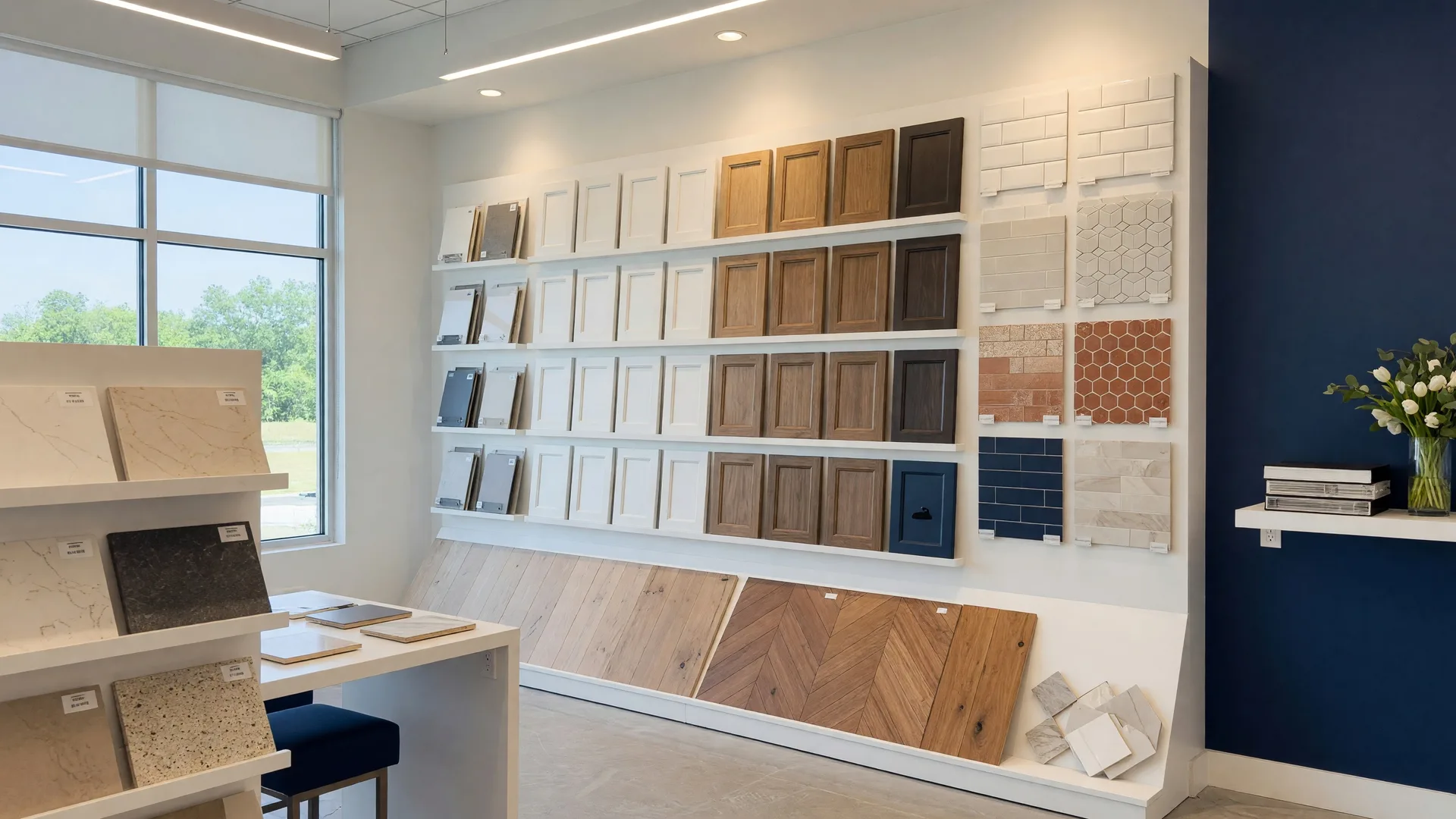
The design center is the builder's showroom — a physical space (or in some cases, a virtual platform) where you select the finishes and options that customize your home beyond its base floor plan. After you sign a purchase contract, the builder schedules a design appointment — typically a 2- to 4-hour session — where you'll work with a design consultant to make your selections.
What you're choosing falls into two broad categories:
Structural Options
These are changes to the home's physical layout and bones — adding a finished basement, extending the garage, converting a bedroom to a loft, adding a sunroom, bumping out a bump-out, or upgrading to a different roof pitch. Structural options must be decided early because they affect framing and construction sequencing. They're typically the most expensive upgrades — and the hardest to change after the fact.
Cosmetic & Finish Selections
These are the visible finishes — countertops, cabinet color and style, flooring type and color, tile selections, paint colors, lighting fixtures, cabinet hardware, plumbing fixtures, and appliance packages. These choices define the look and feel of your home and are what you'll see and touch every day.
Understanding the difference between these two categories matters because they have very different cost profiles, very different timelines, and very different implications for your long-term satisfaction with the home. Let's break them down.
Why the Model Home Isn't Your Base Price
This is the single most important thing every new construction buyer needs to understand: model homes are not built to base specifications. They are fully upgraded showcase homes designed to demonstrate the builder's best work and to inspire you to select upgrades. The granite countertops, the hardwood flooring that extends up the stairs, the upgraded light fixtures, the crown molding, the kitchen backsplash, the stainless steel appliance package — none of that is included in the base price you see on the builder's website or flyer.
According to a 2026 industry analysis by NewHomeSource, the gap between a builder's base specification and a fully upgraded model home can range from $40,000 to over $100,000, depending on the builder and the community. In the Fredericksburg area — where production builders like Ryan Homes, D.R. Horton, Lennar, and Toll Brothers each have different base-spec philosophies — this gap varies significantly.
How Base Specs Differ by Builder (Fredericksburg Area)
Lennar (Everything's Included®)
Lennar's model includes many finishes in the base price — granite countertops, upgraded cabinetry, and certain appliance packages are standard. The upgrade gap tends to be smaller, but customization flexibility is also more limited.
Ryan Homes
Ryan Homes starts with a moderate base spec and offers tiered upgrade packages. Expect the base home to include laminate countertops, builder-grade carpet, and standard fixtures. Upgrading to quartz counters, hardwood flooring, and premium lighting can add $25,000–$50,000.
D.R. Horton
D.R. Horton offers multiple product lines (D.R. Horton, Emerald, Express) with varying base specifications. Their higher-end Emerald series includes more upgrades in the base, while the Express line starts at a lower spec with more à la carte options.
Toll Brothers
Toll Brothers is a luxury production builder with a higher base spec and an extensive upgrade catalog. Their base home includes features that would be upgrades at other builders, but their design center offers premium tiers that can push the total project cost significantly higher.
Specifications vary by community and floor plan. Always request a written base specification list before your design appointment so you know exactly what's included and what's not.
The Upgrades Worth Prioritizing
Not all upgrades are created equal. Some provide genuine long-term value — improved livability, lower maintenance, better energy efficiency, or stronger resale appeal. Others are purely aesthetic and may not justify their cost. Here's my framework for deciding where to invest your design center budget.
Upgrade #1: Structural Options That Affect Function
If there's a structural option that changes how you'll use the home — adding a finished basement, extending the garage from two-car to three-car, converting a flex room to a fourth bedroom, or adding a covered porch — these are almost always worth the investment. Structural changes made during construction cost a fraction of what they'd cost as a post-close renovation. Adding a finished basement during construction might cost $20,000–$35,000; finishing the same basement after you've moved in could cost $50,000–$80,000 because of the added complexity of working around finished spaces.
High-Value Structural Upgrades
- → Finished basement (if your community allows walkout or day-light basements)
- → Garage extension or third-car bay
- → Additional electrical outlets, USB outlets, and pre-wiring for speakers, security, and home office
- → Bedroom or loft conversions that increase your room count
- → Extended deck, covered porch, or screened-in patio
- → Mudroom or drop zone built-ins
Upgrade #2: Kitchen Countertops and Cabinetry
The kitchen is the heart of the home and the most scrutinized room by future buyers if you ever sell. Upgrading from laminate to quartz or granite countertops, and from builder-grade laminate cabinets to painted or shaker-style wood cabinets, is one of the highest-ROI upgrades at the design center. According to the National Association of Realtors' 2025 Remodeling Impact Report, kitchen upgrades recoup 67%–80% of their cost at resale. But more importantly, you'll enjoy them every single day.
2026 design trends lean toward warmer, more natural kitchen aesthetics. After years of all-white kitchens, builders across the Fredericksburg corridor report growing demand for warm wood tones, mixed metal hardware, and natural-texture finishes. Per NewHomeSource and Vertical Builders (Central Virginia), personalized kitchens with open shelving, concealed storage, and fewer upper cabinets are gaining traction — buyers want display space for meaningful pieces and a cleaner, more curated look.
Upgrade #3: Flooring Where It Counts
Flooring is one of the most visible and impactful choices you'll make. In the main living areas, upgrading from builder-grade carpet to luxury vinyl plank (LVP), engineered hardwood, or tile is almost always worth it — these materials are more durable, easier to maintain, and create a more polished look. In bedrooms, a quality carpet upgrade makes sense for comfort. But here's the key: do all your hard-surface flooring during construction. Retrofitting hardwood or tile throughout the main level after move-in is dramatically more expensive and disruptive than having the builder install it from the start.
Upgrade #4: Electrical and Low-Voltage Pre-Wiring
This is the upgrade that almost every buyer overlooks — and the one I most frequently recommend. Pre-wiring your home for surround sound, a security system, additional ethernet drops, USB-C outlets in key locations, and smart home infrastructure costs relatively little during construction (often $1,500–$5,000) but is extremely expensive and messy to add after the fact. Even if you don't plan to use all the wiring immediately, having it in place future-proofs your home.
In 2026, with the rise of smart home technology, whole-home Wi-Fi mesh systems, and AI-integrated home management, the demand for robust low-voltage pre-wiring is growing rapidly. Several builders active in the Fredericksburg area — including Stanley Martin and NVHomes in the Northern Virginia corridor — now offer structured wiring packages as design center options. If yours does, take it seriously.
Upgrade #5: Bathrooms That Go Beyond Builder Grade
Bathrooms are the second most important room for resale and daily enjoyment. A few targeted upgrades go a long way: upgrading the primary bathroom shower from a standard fiberglass insert to a tiled walk-in shower with glass enclosure, adding a freestanding soaking tub, upgrading to soft-close cabinet drawers, and selecting a higher-quality vanity top. These choices transform a builder-grade bathroom into a spa-like retreat — and the cost differential during construction is typically $3,000–$8,000, far less than a post-close bathroom remodel.
Per 2026 design reports from Build Design Center (Northern Virginia) and Modern Home Builder, spa-inspired bathrooms are the dominant trend in the region — with walk-in showers over tubs as the most popular layout, smart mirrors with built-in lighting gaining ground, and wellness-focused design elements like circadian lighting and air purification systems moving from luxury to mainstream in higher-end builds.
What to Skip (or Do Yourself After Closing)
Just as important as knowing what to upgrade is knowing what not to upgrade at the design center. These are areas where builder markups are steep, the value proposition is weak, or the work can be done better and cheaper after you move in.
Basic Paint Upgrades
Builders charge $1,000–$3,000+ for premium paint packages or accent walls. Painting a room yourself (or hiring a local painter) after closing typically costs $300–$800 per room — and you'll get more color choices. Save the design center budget for things that are genuinely harder to change later.
Basic Landscaping Packages
Many builders offer front-yard landscaping packages at the design center for $3,000–$8,000. In most cases, a local landscaper can do the same work for less — and you'll have more control over plant selection and design. The exception: if the builder's package includes irrigation systems or significant grading work, those are harder to add later.
Window Treatments and Blinds
Some builders offer blinds and shades at the design center — marked up significantly over retail. Custom blinds from a local provider like Budget Blinds or blinds.com will cost less, fit better, and give you more style options. This is easy to handle after closing.
Garage Organizational Systems
Built-in garage storage systems and epoxy floor coatings offered at the design center are premium-priced. Post-close solutions from companies like Rubbermaid or local epoxy coating specialists are typically 40%–60% less expensive.
Premium Appliance Packages (Sometimes)
This one is nuanced. If the builder offers a significant discount on a premium appliance package as part of an incentive, it can be worth it. But if you're paying full retail markup at the design center, you'll often find better deals purchasing appliances yourself during holiday sales events — especially at Lowe's, Home Depot, or local appliance stores.
How to Set and Stick to a Design Center Budget
The design center is where good intentions go to blow past budgets. It's designed that way — the samples are beautiful, the consultant is knowledgeable, and every option looks like an upgrade from what you started with. Here's how to stay disciplined:
- 1
Know Your Total Budget Before You Walk In
Before your design appointment, determine a firm maximum for design center upgrades — and tell your consultant what it is upfront. If your pre-approved loan allows $30,000 in upgrades, don't let the appointment push you to $45,000. Overages can require loan restructuring or additional cash to close.
- 2
Request a Base Spec List in Advance
Ask for a written list of what's included in your base price before the appointment. This lets you evaluate each upgrade against the actual base, rather than against the model home. It's the single most effective way to avoid paying for things that are already included.
- 3
Prioritize the "Permanent Decisions"
Use a simple filter: if it would require tearing open walls, pulling up floors, or major construction to change later, upgrade it now. If it's something you can change with a trip to Home Depot and a Saturday afternoon, skip it at the design center and do it yourself. Structural options, flooring, countertops, and electrical pre-wiring fall in the first category. Paint, hardware, light fixtures, and window treatments fall in the second.
- 4
Use Builder Incentives Strategically
If your builder is offering a design center credit (a common incentive I covered in my earlier post on builder incentives), allocate it to the upgrades that deliver the most value — not the most flash. A $10,000 credit spent on upgraded countertops and hard-surface flooring is almost always a better investment than spending it on a premium lighting package or decorative tile.
- 5
Don't Make Decisions Under Pressure
If the design center appointment feels rushed or high-pressure, it's okay to pause and come back. Some builders allow a second appointment or give you time to review selections overnight. This is a major financial decision — take the time you need. As your advisor, I'll make sure you have space to make thoughtful choices, not impulsive ones.
2026 Design Trends Driving Design Center Choices in Virginia
Design trends in 2026 reflect a broader shift toward warmth, authenticity, and wellness in the home. Here's what I'm seeing influence selections across the Fredericksburg corridor — and what builders are responding to in their design center offerings:
Warm Over Cool
After a decade of cool grays and bright whites, 2026 is all about earth tones, warm wood, and natural textures. Virginia builders report surging demand for warm-toned LVP flooring, painted maple cabinets in soft greens and warm whites, and mixed-metal hardware.
Biophilic Design
Larger windows, natural light optimization, and indoor-outdoor connections are top priorities. Buyers are choosing bigger window packages, sliding glass doors, and covered outdoor living spaces that blur the line between inside and out.
Wellness-Centered Homes
Whole-home air purification, circadian lighting systems, and spa-inspired primary bathrooms are moving from luxury to mainstream. Walk-in showers with rain heads, freestanding tubs, and heated bathroom floors rank among the most popular upgrade selections in Northern Virginia.
Flexible Spaces
With remote work here to stay, dedicated home offices, flex rooms, and multigenerational living options (like accessory dwelling spaces or in-law suites) are high on buyer wish lists. Structural options that add these spaces are among the best investments at the design center.
Sources: NewHomeSource 2026 Design Trends, Vertical Builders (Central Virginia), Build Design Center (Northern Virginia), Modern Home Builder, and Keel Custom Homes (Richmond, VA).
Your Design Center Appointment Checklist
Preparation is everything. Here's what to bring and do before you sit down with the design consultant:
Before the Appointment
- → Request and review the written base specification list
- → Set a firm maximum upgrade budget (and share it with your advisor)
- → Bring photos of kitchens, bathrooms, and rooms you love (Pinterest, Houzz, Instagram)
- → Measure your current furniture to ensure it fits the new floor plan
- → Prioritize your must-haves vs. nice-to-haves list
- → Research the builder's current incentive packages (design center credits, etc.)
During the Appointment
- → Ask for the cost of each upgrade as you go — don't wait until the end to see the total
- → Request samples to take home and compare against your existing furniture and decor
- → Ask about lead times for custom selections (some items add weeks to the build)
- → Confirm which upgrades affect your loan amount vs. requiring separate payment
- → If you feel rushed, ask to pause and schedule a follow-up appointment
The Bottom Line
The design center is where your new construction home transforms from a floor plan into something uniquely yours. It should be fun — but it should also be strategic. The buyers who come out ahead are the ones who know what matters most (structural options, kitchen upgrades, flooring, and electrical pre-wiring), what can wait (paint, basic landscaping, and decorative fixtures), and how to use their budget to get the most long-term value from every dollar they spend.
Across the Fredericksburg, Stafford, Spotsylvania, Orange, Fairfax, and Prince William County area, every builder's design center operates a little differently. Some offer tiered packages with limited customization; others have à la carte menus with hundreds of options. Some builders include more in the base price than others. Understanding these differences — and having an advisor who's been through the process with each of them — makes your design center experience less overwhelming, more productive, and ultimately more rewarding.
If you're preparing for a design center appointment — or if you're still deciding which builder and community to choose — I'd love to help. I attend design center sessions with my buyers, help set realistic budgets, and make sure every selection aligns with both your lifestyle and your long-term goals. Contact me today for a free consultation.
"The design center is where your house starts to feel like home. My job is to help you make choices you'll love living with — and that your wallet will thank you for later."
— Barbara Jennings
New to the process? The New Construction Buyer Guide covers financing a build, evaluating incentives, lot selection, the design center, contracts, and closing inspections in one place.
When Barbara isn't helping families find their new construction home in Virginia, she's sharing the latest insights on building and buying across the Fredericksburg region. Learn more at barbara-jennings.com.
Ready to Make Your Design Center Selections?
I'll help you navigate the design center process, set a smart budget, and choose upgrades that maximize your home's value and your enjoyment. Contact me today for a free consultation.

Barbara Jennings
REALTOR® · eXp Realty · New Construction Specialist
Barbara Jennings is a licensed Virginia REALTOR® with eXp Realty, specializing in new construction, builder negotiations, and the Fredericksburg-area market. With her proven 100-point Marketing Plan and advanced AI-driven strategies, she helps buyers find the right home at the right price — and save thousands in the process.