
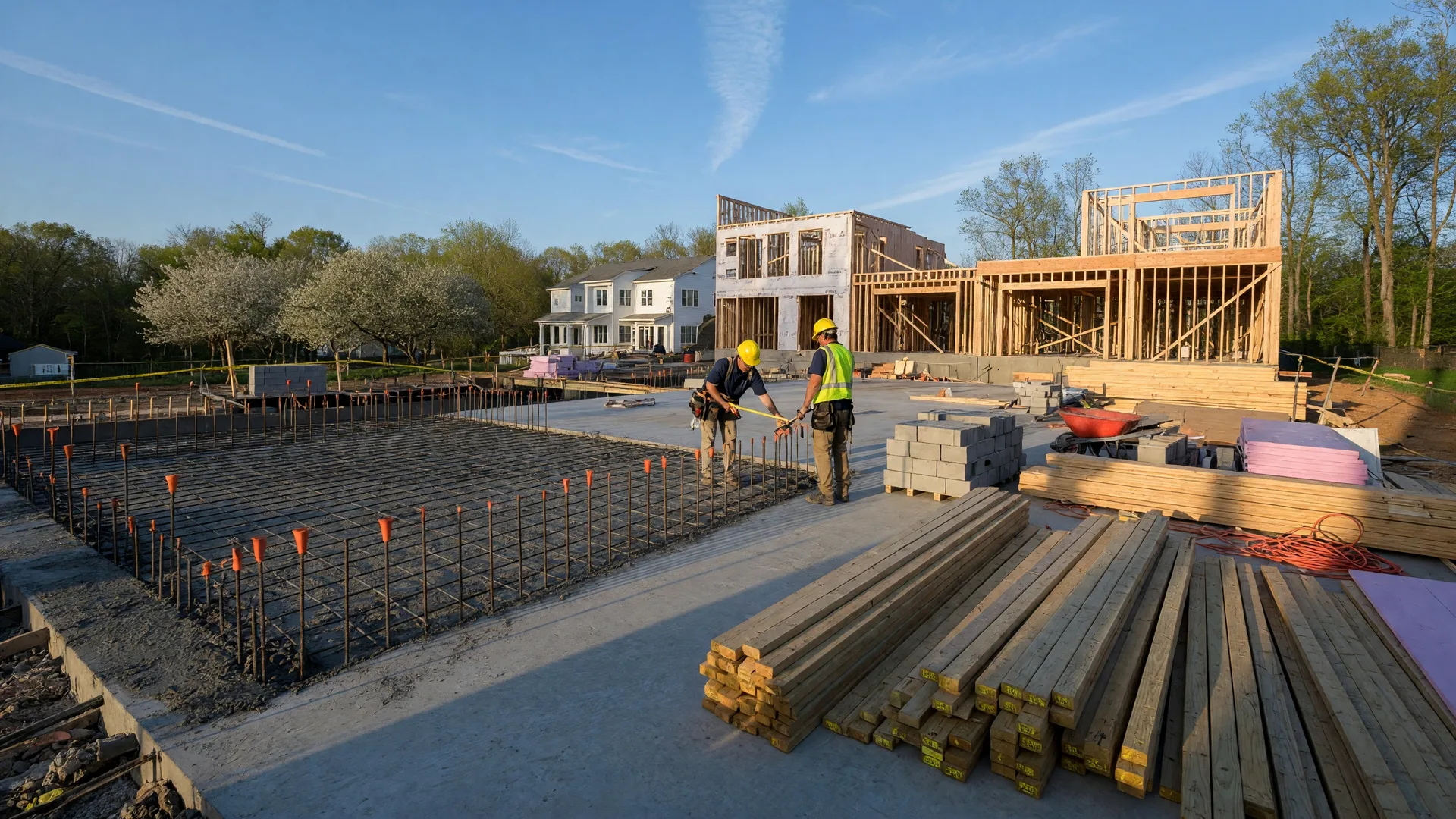
Here is a truth I share with every buyer I work with across Fredericksburg, Stafford, Spotsylvania, and beyond: a brand new home is not a perfect home. Even the most reputable builders — Ryan Homes, D.R. Horton, Lennar, Toll Brothers, Stanley Martin — build hundreds of homes a year, and the reality is that mistakes happen. The question isn't whether your new home will have issues. The question is whether you catch them before you close.
New construction inspections are your single most powerful tool for protecting your investment. And in Virginia, the inspection process isn't just one walk-through before closing — it should be a multi-stage process that starts when the foundation is poured and continues through the final walk-through. Let me walk you through exactly what to expect, what to look for, and how to make sure your new build is built to last.
Why a New Home Needs an Inspection
A lot of buyers ask me this question: "If the county inspector already checks everything, and the builder has quality control, why do I need my own inspection?" It's a fair question, and the answer matters.
Municipal inspectors check code minimums
The Virginia Uniform Statewide Building Code (USBC) sets the legal minimum for construction. Municipal inspectors verify compliance with that code — they are not inspecting for quality, craftsmanship, or long-term durability. Their job is to confirm the home meets the bare legal standard, not whether the finishes are straight or the HVAC was sized correctly for your family's needs.
Builder QC is not independent
Every builder has their own quality control process — and most take it seriously. But builder QC representatives work for the builder. Their incentives are not the same as yours. A third-party inspector works for you and only you, catching issues that builder QC might miss or deprioritize. Think of it as having your own project manager on your side.
The bottom line
An independent inspection is the only way to get an objective assessment of your home's construction quality. And because the Virginia USBC requires inspections at specific stages before work is concealed, you need to be involved from the beginning — not just at the end.
The Three-Phase Inspection Process
In Virginia, the new construction inspection process is most effective when broken into three distinct phases. Each phase gives you access to parts of the home that will be closed up and invisible after the next stage of construction. Missing a phase means losing that visibility forever.
Phase 1: Foundation Inspection
Before the slab is poured — your first and best look at what holds your home up
The foundation inspection happens after the footings are dug, the rebar is placed, and the forms are set — but before the concrete is poured. This is your only chance to verify the foundation before it's buried under concrete. A good inspector will check:
- Rebar size, spacing, and placement according to engineered plans
- Proper soil compaction and bearing capacity
- Foundation depth — must be below the frost line (Virginia frost depth varies by region, typically 12 to 18 inches)
- Dampproofing and drain tile installation (if the design includes a basement)
- Termite treatment and vapor barrier placement
Under the Virginia USBC, the foundation inspection must be obtained prior to concealment — meaning before the concrete is poured. If you miss this phase, you will never see the rebar layout or footing dimensions again.
Phase 2: Pre-Drywall (Framing) Inspection
The most critical inspection phase — once the drywall goes up, the skeleton disappears
This is the inspection that matters most. It happens after the framing is complete, the roof is on, and the plumbing, electrical, and HVAC rough-ins are installed — but before insulation and drywall go up. This is your last opportunity to see the bones of your home and the systems inside the walls. Here is what a thorough pre-drywall inspection covers:
Structural Framing
- Wall, floor, and roof framing alignment
- Proper nailing patterns and hardware
- Load-bearing wall identification
- Sheathing and weather barrier installation
- Window and door header sizing
Plumbing Rough-In
- Pipe material and sizing
- Proper slope on drain lines
- Vent pipe routing
- Water heater connections
- Shower pan and tub installation
Electrical Rough-In
- Wire gauge and type
- Outlet and switch placement
- Box fill calculations
- Smoke detector wiring
- Panel and subpanel installation
HVAC Rough-In
- Ductwork sizing and routing
- Duct pressure testing (required by VUSBC)
- Return air pathway sizing
- Refrigerant line installation
- Condensate drain routing
Insulation & Weatherization
- Insulation R-value verification
- Thermal envelope certificate (required)
- Window and door flashing
- House wrap integrity
- Air sealing details
Roof & Exterior
- Roof sheathing and underlayment
- Step flashing at wall intersections
- Gutter and downspout installation
- Siding and trim installation
- Soffit and fascia venting
Under the 2021 Virginia USBC, duct pressure testing is now mandatory (Section N1103.3.3). A post-construction blower door test may also be required depending on the jurisdiction. Make sure your inspector checks for compliance with these newer code requirements.
Phase 3: Final Inspection (Pre-Settlement)
The comprehensive walk-through — what most people think of as a home inspection
The final inspection is the most familiar phase — it happens after the home is fully finished, just before closing. At this stage, everything is visible: floors, paint, cabinets, countertops, fixtures, trim. A thorough final inspection should cover:
- Structural and systems verification — confirming that issues flagged in Phase 2 were properly addressed and that all systems (HVAC, plumbing, electrical) are functioning correctly
- Interior finishes — inspecting drywall texture, paint quality, flooring installation, trim work, cabinet alignment, countertops, backsplash, and all interior doors and hardware
- Plumbing fixtures — checking all faucets, shower heads, toilets, tubs, sinks, and drains for proper operation, water pressure, drainage, and leaks
- Electrical — testing every outlet, switch, and fixture; verifying GFCI outlets in bathrooms, kitchen, and exterior; checking the panel for correct labeling
- HVAC — testing heating and cooling operation, checking temperature differentials, verifying thermostat placement and operation, inspecting condensate drainage
- Exterior — inspecting siding, trim, windows, doors, gutters, downspouts, grading, driveway, walkways, and any exterior structures
- Attic and crawl space — checking insulation, ventilation, signs of leaks, and proper sealing of all penetrations
The final inspection is also the time to verify that every upgrade and option you selected in the design center was installed correctly. I cannot tell you how many times I have caught a missing upgraded appliance or wrong countertop material during final walk-throughs with my buyers.
The Builder's Walk-Through vs. Your Inspection
One of the most common misunderstandings I see is buyers confusing the builder's orientation walk-through with an independent inspection. They are not the same thing, and they serve very different purposes.
The Builder's Walk-Through
Typically scheduled about a week before closing, this is a guided tour with a builder representative who shows you how the home's systems work — where the water shutoff is, how to program the thermostat, how to change the HVAC filter. The builder rep may also note minor cosmetic issues and commit to fixing them. But they are not there to find problems — they are there to orient you to your new home.
Bring your inspector to this walk-through. Having a trained eye alongside you ensures that nothing gets missed in the excitement of seeing your finished home for the first time.
Your Independent Inspection
Your third-party inspection is a comprehensive, objective assessment of the entire home — from the foundation to the roof, from the electrical panel to the bathroom exhaust fans. An independent inspector has no relationship with the builder and no incentive to overlook issues. They work for you and will provide a detailed written report with photos and recommendations.
The cost of an independent inspection typically ranges from $300 to $600 for the final inspection, with additional fees for foundation and pre-drywall phases. When you consider that you are investing hundreds of thousands of dollars in your home, this is the best money you will spend.
Virginia Building Code: What Your Inspector Should Verify
Virginia has its own statewide building code, the Virginia Uniform Statewide Building Code (USBC), which supersedes any local building codes. All construction in the state — including Fredericksburg, Stafford, Spotsylvania, Orange, Fairfax, and Prince William County — must comply with the VUSBC. Here are the specific code requirements your inspector should verify:
Mandatory Inspection Staging
The VUSBC (Section 113) requires inspections at specific stages: foundation, framing, insulation, electrical rough-in, plumbing rough-in, mechanical/HVAC rough-in, and final inspection. Each stage must be inspected prior to concealment — meaning before the work is covered by drywall, concrete, or other materials. Failing to inspect at any stage is a code violation.
Thermal Envelope Certificate
Under the 2021 VUSBC, a thermal envelope certificate must be completed by an approved party and posted in the home. This documents the R-values of all insulation installed in walls, ceilings, floors, and foundations. Your inspector should verify this certificate exists and matches what was specified in your home's plans.
Duct Leakage Testing
The 2021 VUSBC (Section N1103.3.3) requires duct pressure testing to verify that duct systems are not leaking excessively. Leaky ducts can increase your energy bills by 20 to 30 percent and create pressure imbalances that make some rooms uncomfortable. Your inspector should verify that duct testing was performed and passed.
Six-Month Inspection Interval
The VUSBC requires that building inspections occur at a minimum of every six months to prevent permit lapse. This is particularly important for custom builds or homes where construction slows down. Your inspector can help you track whether inspections are being completed on schedule.
How to Choose a New Construction Inspector
Not all home inspectors specialize in new construction. In fact, most residential inspectors focus on existing homes, where the issues are different — aging systems, deferred maintenance, and visible wear and tear. New construction inspections require a different skill set: knowledge of building codes, familiarity with modern construction methods, and the ability to spot issues before they are concealed behind drywall.
Look for ASHI or InterNACHI Certification
Inspectors certified by the American Society of Home Inspectors (ASHI) or the International Association of Certified Home Inspectors (InterNACHI) have demonstrated competency through training, testing, and continuing education. These certifications indicate a commitment to professional standards.
Ask About New Construction Experience
Specifically ask how many new construction inspections they have performed and whether they are familiar with the builders active in the Fredericksburg and Northern Virginia market. An inspector who knows how Ryan Homes, Lennar, and Toll Brothers typically build will know exactly where to look for common issues.
Confirm They Do Multi-Phase Inspections
Not all inspectors offer pre-drywall or foundation inspections. Make sure the inspector you hire is willing to visit the site at each construction phase and understands the timing requirements. The pre-drywall inspection window is narrow — you need an inspector who can schedule on short notice.
Review a Sample Report
A good inspector provides a detailed, photo-rich report with clear descriptions of each issue and its severity. Ask to see a sample report from a new construction inspection. If the report is just a checklist with no photos or descriptions, keep looking.
Check for Code Knowledge
Ask whether they stay current with VUSBC updates, including the 2021 code changes around duct testing and thermal envelope certification. An inspector who knows Virginia-specific code requirements will catch issues that a general inspector might miss.
What Happens When Your Inspector Finds Issues?
This is where having an experienced buyer's agent matters. When your inspection turns up issues — and with new construction, it almost always does — the next step is to present those findings to the builder and negotiate repairs before closing.
Here is how it typically works. Your inspector provides a written report with photos and descriptions of each issue. I work with you to categorize each finding: critical items that must be fixed before closing (like structural concerns or code violations), important items that should be fixed (like improper window flashing or HVAC issues), and cosmetic items that are reasonable to address under warranty after closing.
Most reputable builders will address legitimate inspection findings, especially during the pre-drywall phase when fixes are inexpensive and straightforward. After drywall is installed, even simple fixes become complex — which is why the pre-drywall inspection is so valuable. Once the home is finished, builders are less willing to open up walls, but they will typically address issues found during the final inspection through their warranty process.
Having an experienced agent negotiate the repair process makes a significant difference. I have been through hundreds of new construction transactions across Fredericksburg, Stafford, Spotsylvania, and the broader Virginia market. I know which builders respond well to inspection findings and how to frame requests to get results.
The Most Common Issues Found in New Construction Inspections
After years of attending inspections with buyers, certain issues show up time and again across builders and communities. Knowing what to look for helps you ask better questions:
| Issue | Common in Phase | Why It Matters |
|---|---|---|
| Inadequate flashing at windows and doors | Pre-drywall | Leads to water intrusion, rot, and mold — one of the most expensive repairs to fix after construction |
| HVAC duct leaks and improperly sized returns | Pre-drywall | Wastes energy, creates hot and cold spots, and can cause negative air pressure issues |
| Missing or improperly installed insulation | Pre-drywall | Gaps in insulation dramatically reduce energy efficiency and comfort |
| Electrical wiring issues | Pre-drywall | Staples too tight, improperly stripped wires, missing junction box covers — all fire hazards |
| Poor drywall finishing | Final | Visible seams, nail pops, and texture mismatches that require repainting to correct |
| Grading and drainage problems | Final | Improper grading directs water toward the foundation, causing basement or crawl space moisture issues |
The Bottom Line: Inspect Early, Inspect Often
Buying a new construction home in Virginia is one of the most exciting investments you will ever make. You get to choose your floor plan, pick your finishes, and watch your home take shape from the ground up. But that excitement should never come at the expense of due diligence.
A thorough, multi-phase inspection process — foundation, pre-drywall, and final — gives you the confidence that your new home is built to last. It catches the issues that county inspections and builder QC miss, gives you leverage to negotiate repairs before closing, and creates a documented record that supports future warranty claims if problems emerge later.
Whether you are building with Ryan Homes in Fredericksburg, Lennar in Stafford, Toll Brothers in Fairfax, or any builder across Spotsylvania, Orange, Prince William, or Arlington, I will make sure you have a trusted inspector by your side at every phase. That is the kind of protection that turns a new construction purchase into a confident, informed investment.
"Your new home is only as good as the foundation it sits on and the walls that enclose you. Inspect them before they disappear behind drywall — because after closing, the only tool you have is a warranty claim."
— Barbara Jennings
When Barbara isn't helping families find their new construction home in Virginia, she's sharing the latest insights on building and buying across the Fredericksburg region. Learn more at barbara-jennings.com.
Building a New Home in Virginia?
From choosing an inspector to negotiating repair requests, I will make sure every phase of your new construction journey is covered. Reach out today for a free consultation.

Barbara Jennings
REALTOR® · eXp Realty · New Construction Specialist
Barbara Jennings is a licensed Virginia REALTOR® with eXp Realty, specializing in new construction, builder negotiations, and the Fredericksburg-area market. With her proven 100-point Marketing Plan and advanced AI-driven strategies, she helps buyers find the right home at the right price — and save thousands in the process.