
The design center is where many new home budgets quietly double, not because the upgrades are bad, but because they are seductive and the pressure is on. The good news is that an upgrade budget does not have to be scary: the general rule is simple. Spend on what is expensive or impossible to change later, and be more relaxed about what can be swapped out in a weekend. Here is how to apply that rule with a clear head.
Why Do Some Upgrades Cost Far More Later Than During the Build?
During construction, the walls are open, the trades are already on site, and the builder can add square footage, extra rooms, and rough-ins as part of the normal workflow. After the home is finished, adding a bedroom means extending the floor plan, adding wiring means opening walls, and adding a garage means pouring new foundations. The labor, materials, and disruption scale up quickly.
That is why the classic upgrade advice points first to the things that are structurally embedded in the home. They are the ones where buying now is not splurging, it is saving, because the alternative later is dramatically more expensive or simply impossible to do well.
Which Upgrades Tend to Be Worth the Money During the Build?
High-Value, Hard-to-Change-Later Upgrades
- Extra square footage: adding living space at build time is the single most impactful upgrade, and the least cost-effective to do later.
- An extra bedroom: a fourth or fifth bedroom changes the buyer pool for the home and is very expensive to add after construction.
- Garage size: a two-car versus three-car garage (or a taller garage) is a structural decision that cannot reasonably be revisited later.
- Structural options: ceiling heights, bump-outs, bonus rooms, and layout changes belong to the build phase.
- Wiring and plumbing rough-ins: extra outlets, gas lines, media wiring, and plumbing for a future bath are cheap with open walls and costly after.
If any of these are on your maybe list, the build phase is the cheapest time to decide. Barbara routinely tells buyers: if you think you might want it, price it now, because the cost of the upgrade during construction is almost always the best number you will ever see for it.
What About Cosmetic Finishes?
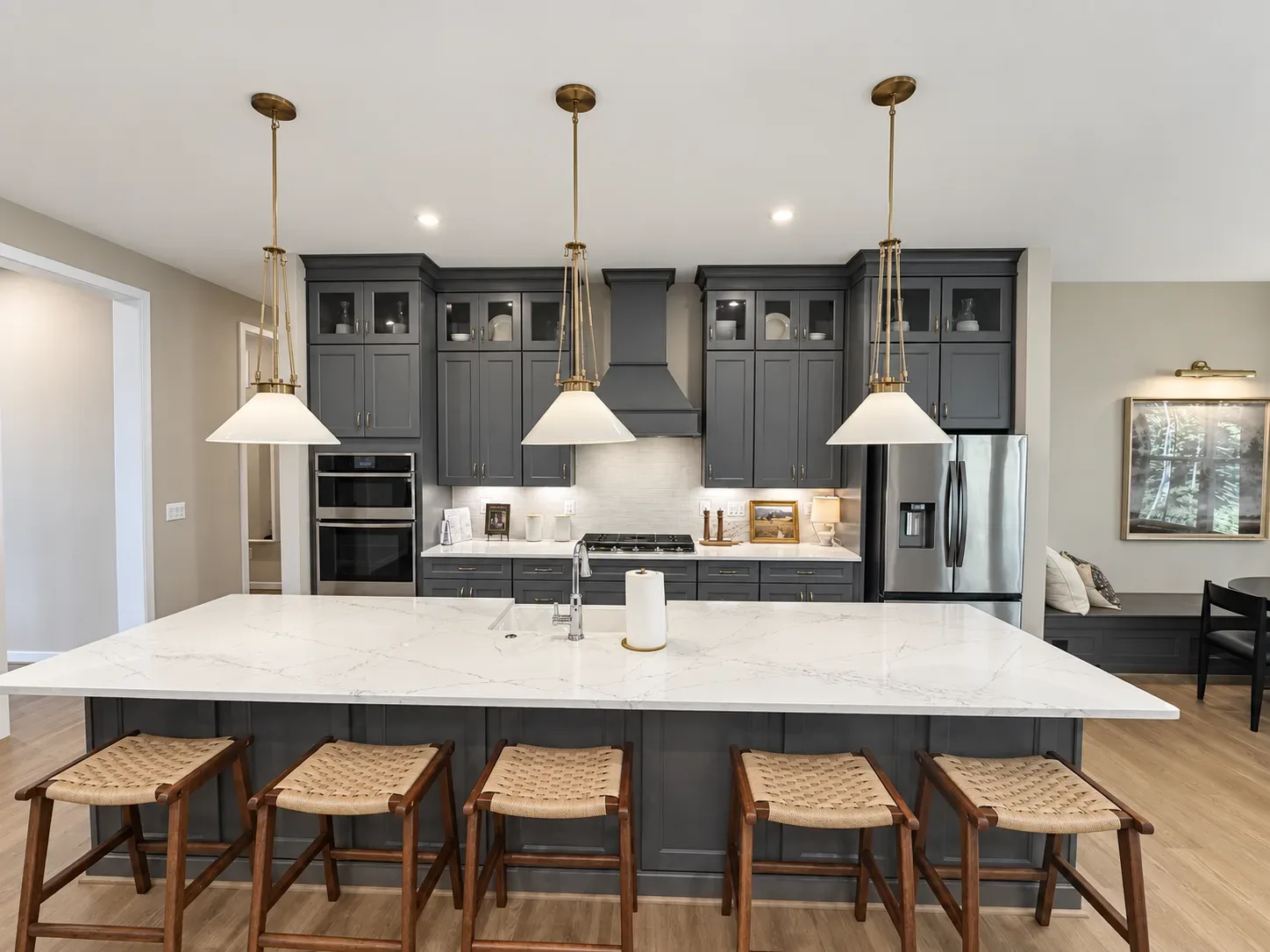
Cosmetic finishes, the countertops, flooring, paint, light fixtures, and hardware that make a home beautiful, are the opposite category. They are visible, replaceable, and easy to change later at comparable cost. Upgrading them at the design center is convenient, and it is not wrong if the budget allows, but it is where an upgrade budget can evaporate fast on things you could have done later for similar money.
The balanced approach: choose a few cosmetic upgrades that give you genuine daily enjoyment or that you will use heavily, like upgraded flooring in high-traffic areas or a countertop you will live with in the kitchen, and skip the long tail of extras whose only job is keeping up with the model home. Your future self can gradually personalize the finishes at your own pace.
Planning your design center selections?
Text or call Barbara Jennings at (540) 840-1133, or book time on her calendar.
Why Does Knowing What Is Standard Come First?
You cannot judge an upgrade without knowing the starting point. Different builders include very different standard packages: one may include upgraded kitchen counters in the base price, another may charge extra for them. Ask for the builder's written standard-features list before you start selecting upgrades, and compare each design center line against it. The question of what is included in the price is covered in detail in our guide to model home features and the purchase price.
Once you know the standard package, you can see exactly which "upgrades" are genuinely optional and which are simply the builder's way of pricing features other builders include. That single document often reshapes the whole design center budget.
How Do You Keep the Design Center From Blowing Your Budget?
Set a selections budget before you walk in, and rank every upgrade twice: once by how much you want it, and once by how hard it would be to change later. Put the hard-to-change items at the top, your daily-use items in the middle, and the purely cosmetic extras at the bottom. When the total creeps past your number, cut from the bottom, not the top.
Also remember that incentives can fund upgrades: if the builder offers a design center allowance, that money changes your effective cost. Barbara helps buyers factor allowances into the budget and holds the line when the selections start climbing. Her guidance on budget discipline pairs well with the site's design center resource for Virginia buyers, which walks through the selection process step by step.
Do Upgrades Add to the Home's Resale Value?
Value is not guaranteed upgrade by upgrade, but the pattern is consistent: upgrades that expand the home or its function, extra space, more bedrooms, a bigger garage, tend to hold value better than cosmetic finishes, because the next buyer sees the same functional benefit. Cosmetic finishes are personal, so a future buyer may not pay you back for the exact countertop or tile you loved.
The honest frame is to upgrade for your own enjoyment first, within a budget you can afford, and let resale value be the tie-breaker: when two options cost the same, pick the one the broadest pool of future buyers would also choose. That keeps the design center fun without turning it into a money pit.
Frequently Asked Questions
Build a Selections Budget You Can Live With
Text or call Barbara Jennings at (540) 840-1133 before you visit the design center, and she will help you rank upgrades, factor in builder allowances, and keep the budget honest. You can also book a consultation on her calendar.
People Also Ask
Buyers search for these questions alongside this one. Here are the direct answers.
What is a rough-in in new construction?
A rough-in is the wiring, plumbing, and ductwork installed inside the walls and floors before they are closed up. Adding an outlet, a gas line, or plumbing for a future bathroom is far cheaper during the rough-in stage than after the home is finished.
Are countertop upgrades worth it?
Kitchens are the most-used room in most homes and matter to future buyers, so a well-chosen kitchen upgrade usually holds value better than many small extras spread through the house. Upgrade what you will actually use, within your budget.
Which upgrades should I skip?
Purely cosmetic items that are easy to change later, like upgraded light fixtures, cabinet hardware, and paint colors, are the classic ones to skip or defer on a budget, unless they bring you real daily enjoyment and fit the budget.
Do upgrades increase resale value?
Some do and some do not. Upgrades that expand the home or its function, like extra space or an additional bedroom, generally hold value better than cosmetic finishes, because the next buyer sees the same benefit.
Can I upgrade the home after closing instead?
For cosmetic finishes, often yes, at comparable cost. For structural changes, extra square footage, or wiring and plumbing inside the walls, doing it later is dramatically more expensive or impossible, so those belong in the build.
New Construction in the Fredericksburg, VA Area
At design centers serving Fredericksburg, Stafford, and Spotsylvania buyers, the same budget advice applies: builders price upgrades line by line, allowances change, and the buyers who stay calm are the ones who arrived with a ranking and a budget.
New construction is a constant across the Fredericksburg, Virginia area. Buyers find active communities in Fredericksburg itself and in the neighboring counties of Stafford and Spotsylvania, each with its own mix of builders, price ranges, and commute options. Stafford and Spotsylvania sit close to I-95 and the Virginia Railway Express, which makes them a practical choice for commuters, while Fredericksburg offers a historic downtown with easy access to the same routes.
Whatever the topic and whichever community you are considering, the same basics hold true across the region: bring your agent to the first model home visit so you are registered as a represented buyer, ask for the builder's standard-features list and the current written incentives, and review the contract and warranty before you sign. Barbara works with buyers in Fredericksburg, Stafford, and Spotsylvania, and she can point you to the communities that match your budget and commute.
Related Reading
- New Construction Design Center Guide for Virginia
- NVHomes, a Virginia new construction builder
- Browse new construction builders in Virginia
More New Homebuyer Questions

Barbara Jennings
REALTOR® · eXp Realty · Virginia License 0225179074
Barbara helps buyers navigate new construction in the Fredericksburg, VA area, including Stafford and Spotsylvania counties, plus Orange, Fairfax, King George, Caroline, Culpeper, Arlington, Alexandria, and Prince William County.
Call or Text (540) 840-1133Last updated: October 23, 2026.