
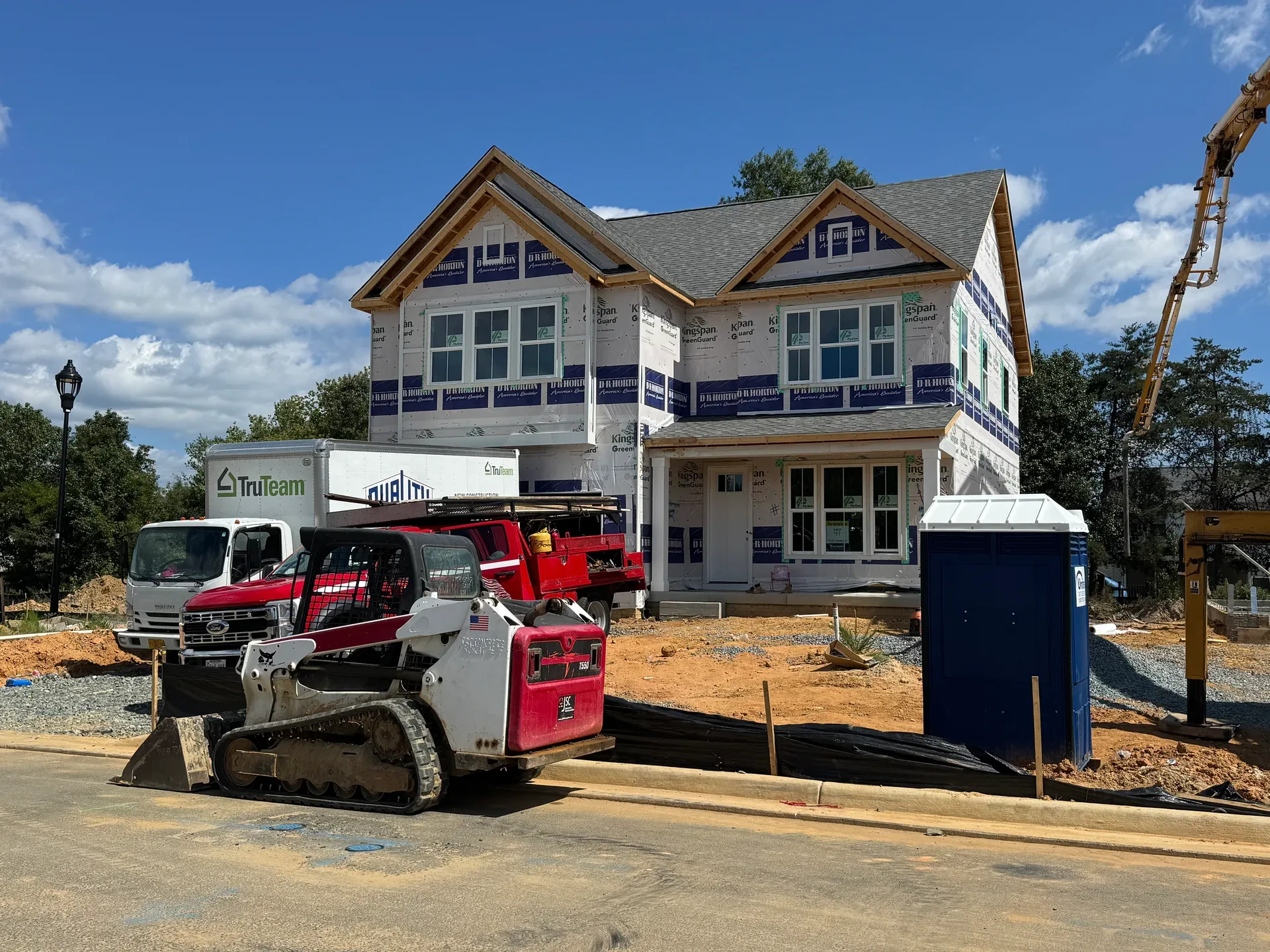
"When will it be done?" is the question every new home buyer asks, and the honest answer is a range, not a date. A production build in Virginia typically takes roughly 4 to 7 months after construction actually begins, a custom build takes longer, and permitting, weather, and materials can stretch any schedule. What follows is the phase-by-phase reality of the build so you know what to expect, and what to watch.
How Long Does a Typical Production Build Take in Virginia?
For the large production builders active across the Fredericksburg and Northern Virginia region, the common range is roughly 4 to 7 months from the start of construction to move-in, though some homes finish faster and some run longer. That clock typically starts after the paperwork, lot selection, and design center work are done, so the full journey from signing a contract to holding keys is often longer than the construction window itself.
Several factors move the number: the size and complexity of the floor plan, the builder's current pace of starts, the season the build happens in, and how quickly the various inspections clear. Treat the builder's estimate as a target, and ask what the estimate assumes and what has been known to push it. Timelines are general ranges, not promises.
Why Do Custom Builds Take Longer?
Custom homes are a different animal. The design is created for you, the plans need to be drawn and approved, the permits take longer, and every decision from foundation to finishes is made along the way. Add in custom materials with longer lead times and you are often looking at a year or more from design through completion. The trade-off is a home built exactly to your plan, which many buyers happily accept.
If a year feels too long, the middle ground is a semi-custom builder: choose from a set of established floor plans, then customize finishes and some structural options. Semi-custom timelines typically land between production and fully custom, and it is a popular path across the region.
What Happens During Site Prep and Foundation?
Before the walls go up, the lot must be cleared, graded, and prepared, utilities need to stubbed in, and the foundation must be poured: footings first, then the slab or basement walls, then the floors. Permits and inspections happen in this phase, and it is where weather can already write the first delay into the calendar, especially through a wet winter or spring.
Need to plan around a real construction schedule?
Text or call Barbara Jennings at (540) 840-1133, or book time on her calendar.
When Does Framing Happen?
Framing is where the home stops being a flat foundation and starts looking like a house. The wall framing, roof structure, and exterior sheathing go up quickly with a full crew, and this is the stage buyers love to visit, because the floor plan finally feels real. Framing is also when a pre-drywall inspection becomes the most valuable tool you have: with the walls still open, an independent inspector can review the structure, wiring, plumbing, and HVAC rough-ins.
When Do Plumbing, Electrical, and HVAC Happen?
With the frame standing, the mechanical trades move in: plumbing and electrical rough-ins, HVAC ductwork, and any wiring for smart home features, all installed inside the walls and floors before they are closed up. This is the phase where the upgrades you chose at the design center, like extra outlets, gas lines, and media wiring, physically become part of the home.
Because these systems are about to be hidden behind drywall, this is the last practical moment for a thorough check, another reason the pre-drywall inspection is worth scheduling before the walls are buttoned up.
What Happens During Insulation and Drywall?
Insulation goes into the walls and attic, then the drywall is hung, taped, and finished, and the first coats of paint go on. The home begins to feel like interior space instead of a skeleton. Taping and finishing drywall involves drying time, and humidity can slow it down, so this phase can be sensitive to weather of a different kind than the foundation stage.
What Happens During Finishes?
Finishes are the long tail of the build: cabinets, countertops, trim, doors, flooring, fixtures, appliances, and the final paint touches. This phase packs in a lot of trades and a lot of detail work, and it is where your design center selections show up one by one. Finish work is methodical rather than fast, and schedule slips here usually come from materials or appliances arriving late rather than from the work itself.
What About the Final Walkthrough?
Before closing, you and your agent walk the finished home room by room, testing outlets and appliances, checking doors and windows, and verifying every upgrade you paid for is installed. Anything unfinished or damaged goes on a punch list for the builder to complete. A final walk-through is not a formality: it is your last chance to catch issues before you own them, and it is a step worth doing slowly and thoroughly. The site's final walkthrough and closing guide for Virginia buyers walks through it in detail.
What Can Delay a Build in Virginia?
- Permitting: local approvals can take longer than expected, especially for custom or changed plans.
- Weather: heavy rain and freezing temperatures slow foundation work, concrete, and exterior tasks.
- Materials: windows, doors, appliances, and specialty finishes can arrive on their own schedules.
- Material costs and tariffs: tariff-driven price swings on lumber and other materials can slow ordering and add to the total cost of the build.
- Inspections: required inspections are scheduled into the build, and a failed one adds a cycle.
- Change orders: structural or plan changes after construction starts reset parts of the schedule.
None of these are necessarily anyone's fault, and builders plan around them as best they can. What matters is the contract language: the expected timeline, what happens if it slips, and how delays are communicated. Your agent reads those clauses with you before you sign. The full list of contract-time questions is in our guide to what to ask the builder before signing a contract.
What if You Need a Home Faster Than a Build Takes?
If months of construction does not fit your calendar, a quick move-in home may be the answer: a finished or nearly finished build available now, often in weeks. You trade customization for speed, and Barbara can tell you what is currently available across the region. Our comparison of new construction vs. a resale home also covers how timelines factor into the bigger decision.
Frequently Asked Questions
Plan Your Timeline With Someone Who Tracks Builds
Text or call Barbara Jennings at (540) 840-1133 to talk through realistic build timelines, quick move-in options, and the contract language that protects your moving date. You can also book a consultation on her calendar.
People Also Ask
Buyers search for these questions alongside this one. Here are the direct answers.
Why is my new build taking longer than promised?
Weather, permitting, materials, inspections, and change orders are the usual reasons, and custom builds carry more risk than production builds. Ask the builder for the current status and the contract's delay provisions, and have your agent monitor progress.
What is a certificate of occupancy (CO)?
A certificate of occupancy is a document issued by the local government stating that a home has passed its required inspections and is safe and legal to occupy. You will want to confirm the CO is issued before you close.
How long does a pre-drywall inspection take?
The inspection itself is usually quick, but it adds a step to the schedule while the walls are still open. It is one of the best investments in the build, because problems are easy to see and fix at that stage.
Can I speed up a new build?
Not much, once construction has started. Some builders complete established, repeat floor plans more quickly, and a quick move-in or spec home is the real shortcut when you need to move sooner.
When does the clock start on a build timeline?
Usually at the start of construction, after the paperwork, lot selection, and design center work are complete. Ask the builder what the estimate assumes and when the clock starts, so you are comparing the same starting line.
New Construction in the Fredericksburg, VA Area
For buyers building in Fredericksburg, Stafford, and Spotsylvania, the seasons matter: wet winters and early springs can slow foundation work and site preparation, so a build scheduled across those months may run longer than one timed through the drier part of the year.
New construction is a constant across the Fredericksburg, Virginia area. Buyers find active communities in Fredericksburg itself and in the neighboring counties of Stafford and Spotsylvania, each with its own mix of builders, price ranges, and commute options. Stafford and Spotsylvania sit close to I-95 and the Virginia Railway Express, which makes them a practical choice for commuters, while Fredericksburg offers a historic downtown with easy access to the same routes.
Whatever the topic and whichever community you are considering, the same basics hold true across the region: bring your agent to the first model home visit so you are registered as a represented buyer, ask for the builder's standard-features list and the current written incentives, and review the contract and warranty before you sign. Barbara works with buyers in Fredericksburg, Stafford, and Spotsylvania, and she can point you to the communities that match your budget and commute.
Related Reading
- New Construction Timeline in Virginia
- Pulte Homes, an active Virginia builder
- Browse new construction builders in Virginia
More New Homebuyer Questions

Barbara Jennings
REALTOR® · eXp Realty · Virginia License 0225179074
Barbara helps buyers navigate new construction in the Fredericksburg, VA area, including Stafford and Spotsylvania counties, plus Orange, Fairfax, King George, Caroline, Culpeper, Arlington, Alexandria, and Prince William County.
Call or Text (540) 840-1133Last updated: October 23, 2026.