
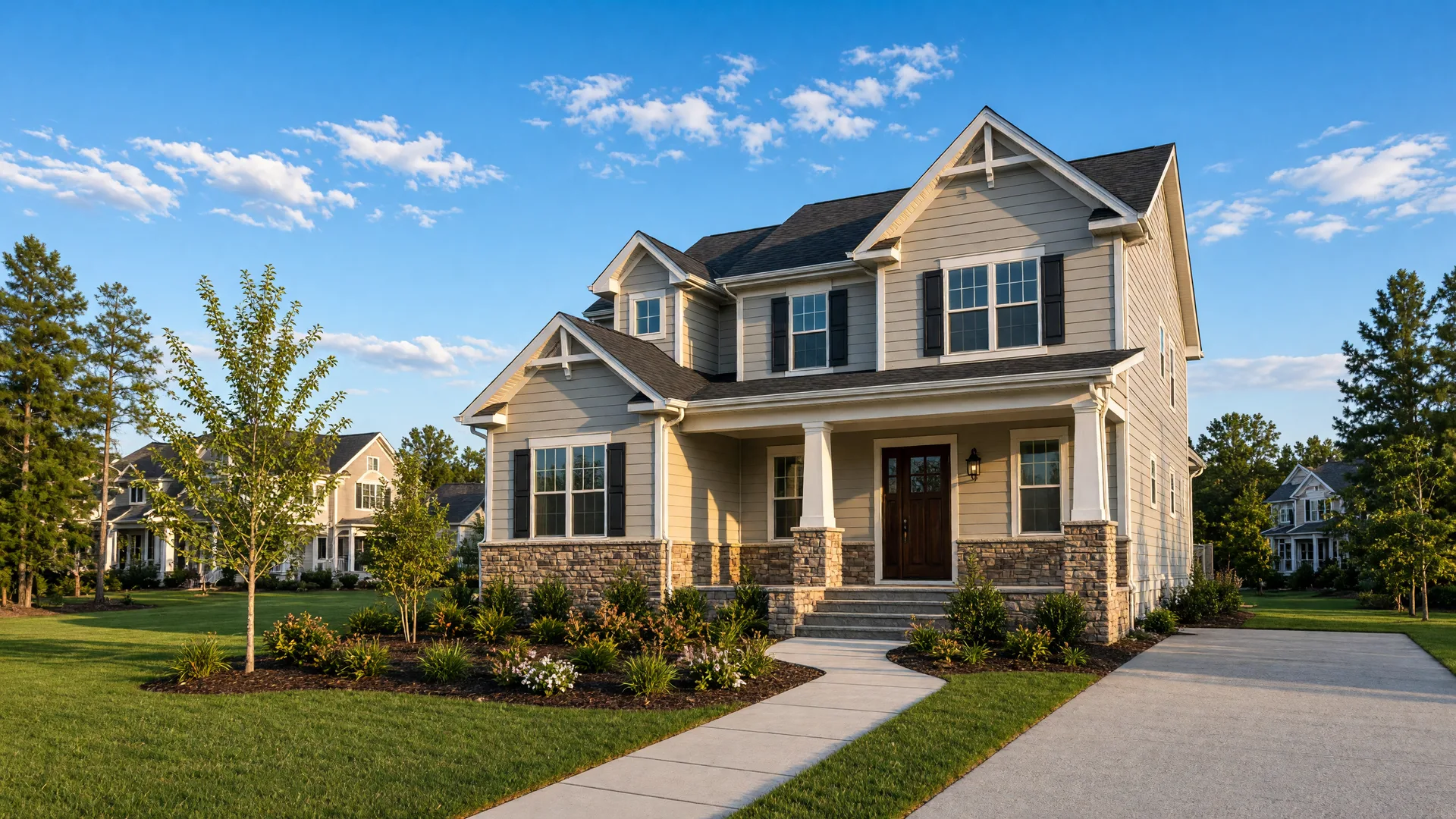
Yes, you can negotiate with builders when buying new construction in Fredericksburg, Virginia, but mostly on value around the price rather than the sticker itself. Builders are typically open to discussion on incentives like rate buydowns and closing cost credits, upgrade and design-center pricing, lot premiums, closing costs and timing, and even earnest money terms. The printed base price is usually the firmest line, and everything depends on the builder, the community, and the market at the time you are buying, so treat every possibility as exactly that: something to ask about, confirm in writing, and compare.
Can you negotiate with builders? Tips for new construction pricing. The tips in this video are informational and fair-housing compliant: what is negotiable varies by builder, community, and market, and no specific outcome is guaranteed.
If you have been touring model homes in Fredericksburg, Virginia, you have probably asked yourself this exact question before you ever sat down in a sales office. The honest answer is that negotiating with a builder is a real conversation, but it is a different one from negotiating with a home seller. Builders publish a price sheet, protect it carefully, and move value through other channels: incentives, upgrades, credits, and timing. That is where most of the room lives, and this guide walks through each area so you know what to ask for and how to read the answer.
One ground rule before the details: across the counties this site covers, the builder's on-site sales representative works for the builder, and a buyer's agent registered on your first visit works for you. A licensed REALTOR® familiar with new construction can help you compare written offers, spot conditions attached to incentives, and review the purchase agreement before you sign. Whatever you discuss, make sure the agreed terms end up in writing in the contract, because anything left out of the paperwork did not happen.
1. Base Price and Lot Premiums
The base price is the number on the spec sheet, and it is the part of new construction pricing builders protect most. That does not mean the conversation stops there, but it does mean knowing what to expect and where the real flexibility sits.
- The base price usually holds. Every home that closes in a community becomes a public record that helps set the value of the homes still for sale, so a deep cut on one home can pull down appraisals across the neighborhood. Builders rarely reduce the base for that reason, and some hold it firm by policy.
- Lot premiums are worth asking about. Premiums are added for location, views, or larger homesites, and they vary a lot within a single community. Builders are sometimes more willing to reduce or waive a premium on a less sought-after homesite than to touch the base price.
- Inventory homes carry more room. Quick move-ins, spec homes, and model homes already built or nearly finished are the listings builders most want to clear, and they are where pricing conversations tend to go furthest.
- Ask for the written price sheet for the current phase. The published price includes only the base and the lot premium. Everything else, from structural options to design center selections to closing costs, is added on top, so the written sheet is where an honest comparison starts.
2. Builder Incentives: Rate Buydowns, Closing Cost Credits, and Upgrade Packages
Incentives are the most common negotiating ground in new construction, and the National Association of REALTORS has reported that roughly two-thirds of builders have been sweetening deals in recent years, with incentives from closing cost credits to rate buydowns, and about a third of builders cutting prices by an average of around 6 percent. The mix varies by community and month, so the useful skill is reading what each incentive actually does for you.
- Rate buydowns. The builder pays points up front to lower your interest rate, often through a temporary 2-1 buydown that reduces the rate for the first two years. A lower note rate lowers your monthly payment, so confirm how long the reduced rate lasts and exactly what the rate becomes afterward.
- Closing cost credits. The builder applies a set dollar amount toward your closing costs and prepaids, which reduces the cash you need at the table. These are often tied to using the builder's preferred lender, so compare the full package against an outside lender's quote before you commit.
- Appliance and upgrade packages. Builders sometimes include or credit appliances, flooring, or finishing packages. Their value depends on whether you would have bought those items anyway, so weigh the package against a simple cash credit for your own situation.
- Get the full offer in writing. The type, the dollar value, any requirement to use the preferred lender, how it appears on the closing disclosure, and any conditions that could change it. An incentive that is only mentioned in conversation is not part of your deal.
3. Upgrade and Design-Center Pricing
If there is one room in new construction where the pricing is most elastic, it is the design center. Upgrades on countertops, cabinetry, flooring, and appliances carry more margin than the base home, which means they carry more room to talk.
- Ask for itemized upgrade pricing. The design consultant can quote each selection individually. Seeing the line items lets you decide where money is worth spending and where the standard finish is fine as-is.
- Negotiate a credit or allowance rather than per-item discounts. A design center credit or allowance toward your overall selections is often an easier ask than asking the builder to discount individual upgrades, and it keeps your budget in your hands.
- Compare upgrade cost against doing it later. Financing upgrades into the mortgage spreads the cost over your loan, which can be convenient, but it adds interest over time. Compare that against hiring a contractor after closing if the builder's price is high.
- Know the difference between build-time and change-order pricing. Structural options priced during the design phase are generally less expensive than the same change requested after construction starts, when time and labor costs rise rapidly.
4. Closing Costs and Timing
Closing costs on a new build are typically a mix of lender fees, title insurance, taxes, recording fees, and prepaid items, and they are a common area of negotiation.
- Closing cost credits are the most direct lever. Ask what the builder can contribute toward closing costs, and confirm whether the offer depends on financing through the builder's preferred lender. Then compare the credit against the rate you are actually quoted.
- Timing creates room. Builders are often more willing to negotiate toward the end of a quarter or year, during the final phases of a community, and on homes already sitting in inventory, when hitting sales targets matters more. A brand-new phase release with strong demand is the opposite case, so compare communities and phases before you settle.
- Confirm how the credit shows up. Whether it appears as a credit on the closing disclosure, a reduction in the purchase price, or an allowance changes what it does for your loan amount and your taxes, so ask to see it in writing.
5. Earnest Money
The earnest money deposit shows the builder you are serious, and while builders have standard amounts, the terms around it are worth understanding before you sign.
- The amount may be negotiable. Builders often quote a standard deposit, but the figure is sometimes open to discussion, especially when you are financing a large portion of the home. You do not need to offer more than the builder requires to show good faith.
- Understand the refund terms exactly. Read what happens to the deposit if your financing falls through, the inspections uncover issues, or the builder's delivery date slips. The contract should spell out each scenario in plain language, and a buyer's agent can review it with you before you sign.
- Ask where the money is held and when it is released. Deposits are typically held in escrow by the settlement agent or broker until closing or a contract release, so confirm the holder and the release conditions in writing.
- Separate earnest money from design deposits. Non-refundable design center or upgrade deposits are a different category of money and are often subject to different rules, so do not assume one set of terms covers both.
6. What Is Usually Not Flexible
Knowing where the room is not is just as useful as knowing where it is. These items tend to be firm:
- Fixed base pricing from certain builders. Some builders publish a low base price and hold it firm by policy, preferring to move value through incentives instead. Ask directly whether the base price is adjustable so you are negotiating against the right assumption.
- Third-party costs. Title insurance premiums, recording and transfer fees, and settlement charges are set by the title company, county, and settlement agent rather than the builder, so they generally do not move. They appear on your closing disclosure with little negotiation room attached.
- Lender-driven items. Mortgage rates move with the market, and lender-required fees like appraisal and credit report charges are set by the lender and its vendors. Shopping lenders, rather than asking the builder, is the way to affect those numbers.
- HOA and community fees. Monthly association dues and community assessments are set in the community documents and approved by the association, so they are not a per-buyer negotiation item.
Negotiation results vary by builder, community, and market
Everything in this guide is general information, not a promise of a specific outcome. Incentives and flexibility differ from builder to builder, from community to community, from phase to phase, and they change as market conditions change. No particular discount, credit, or savings is guaranteed. The reliable route is to ask each builder for a written offer covering the current price, incentives, and any conditions, and to compare those offers against the same all-in cost so you can judge which deal is genuinely better for you.
Sources
The links below are independent sources that informed this guide. They are provided for reference and are not owned or controlled by this site.
- NewHomeSource: Negotiating the Purchase of a New Construction Home on what buyers can expect to negotiate when buying directly from a builder.
- NewHomeSource: 4 Tips for Negotiating New Home Pricing and Upgrades on where upgrade pricing offers the most room.
- NewHomeSource: Negotiating Builder Incentives on how incentive offers work and what to watch for in the fine print.
- National Association of REALTORS: Builders Are Sweetening the Deal with data on the share of builders offering incentives and discounts.
- Consumer Financial Protection Bureau: Find the Right Home covering new construction considerations, including builder deposits and financing.
- Video: Can You Negotiate with Builders? Tips for New Construction Pricing on Barbara Jennings' YouTube channel.
More reading on this site
Frequently Asked Questions
Equal Housing Opportunity
Barbara Jennings, REALTOR® with eXp Realty (VA license 0225179074), is committed to compliance with all federal, state, and local fair housing laws. She does not discriminate against any person because of race, color, religion, sex, national origin, familial status, disability, or any other protected class.
Want Help Comparing Written Builder Offers?
Barbara would be glad to review price sheets and incentive offers with you, walk through the contract, and help you compare builders across Fredericksburg, Stafford, Spotsylvania, and Northern Virginia. Call (540) 840-1133 or schedule a consultation to talk it through.
Barbara Jennings is a licensed Virginia REALTOR® with eXp Realty who specializes in new construction, builder negotiations, and the Fredericksburg-area market. For more on her approach, the communities she covers, and the full range of services she offers, visit her main site at barbara-jennings.com.

Barbara Jennings
REALTOR® · eXp Realty · New Construction Advisor
Barbara Jennings is a licensed Virginia REALTOR® with eXp Realty, specializing in new construction and the Fredericksburg-area market. She serves buyers across Fredericksburg, Stafford, Spotsylvania, Orange, Fairfax, King George, Caroline, Culpeper, Arlington, Alexandria, and Prince William counties, helping them compare builders, review contracts, and make confident decisions.
Preferred Lenders
Questions about financing a new construction home? Connect with our preferred lenders for guidance.

Mike Sanchez
Guaranteed Rate
NMLS #860048
Ken Melendez
Guaranteed Rate
NMLS #2037924Learn more about both lenders, how to reach them, and how they help new construction buyers on the Preferred Lenders page.