
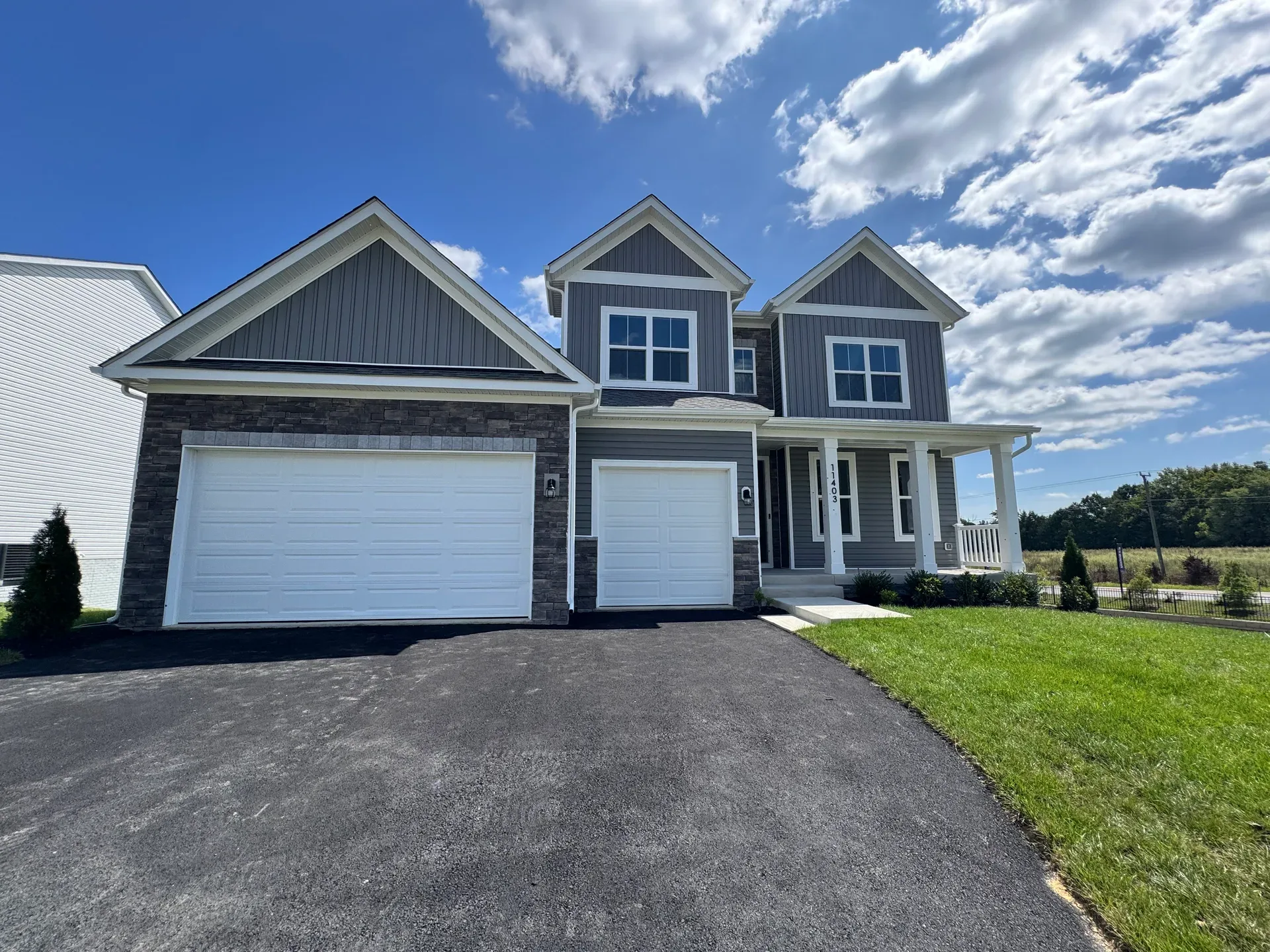
Welcome to the ninth installment of the New Construction Q&A series. Each article takes one real question from Virginia buyers, answers it in plain language, and spotlights a builder active in the market. This week we answer one of the questions I hear in almost every first conversation in 2026, as builders advertise ever-larger incentives: are those offers actually worth your time? If you have a question you want covered in a future installment, send it to me through the contact page and it may be next.
As a licensed Virginia REALTOR® with eXp Realty, I have watched builders in Fredericksburg, Stafford, Spotsylvania, Prince William, Fairfax, and Orange County shift from selling on list price to selling on incentives. The signs are everywhere: banners for closing cost assistance, ads promising interest rate buydowns, and offers of thousands in design center credits. Some of these are genuinely great. Others are a bigger headline than a better deal. The key is learning to read what an incentive is actually worth to you before you let a number on a banner make the decision for you.
How Do Builder Incentives Work in Virginia?
A builder incentive is any financial sweetener the builder uses to reduce the effective cost of the home or the cost of buying it. Builders turn to them when they want to move through a phase quickly, clear inventory or quick move-in homes, or make the monthly payment more competitive in a higher-rate market. Industry tracking has put the national average buyer incentive in the range of $18,000 per home in recent years, which gives you a sense of how much room is typically in these offers across the country, though the mix in any given Virginia community varies by builder and month.
The important thing to understand is that an incentive is rarely a simple discount off the base price. It usually shifts the value into one of a handful of forms, each of which behaves differently in your budget. Knowing which form you are being offered is the first step to knowing whether it actually helps you.
What Does a Builder Incentive Actually Include?
Across the region, incentives tend to fall into these categories:
Closing cost credits
The builder applies a set dollar amount toward your closing costs and prepaids, which reduces the cash you need at the table. This is often the most flexible and useful incentive because it preserves your down payment savings.
Mortgage rate buydowns
The builder pays points up front to lower your interest rate, either for the whole loan or, most often, for the first year or two through a temporary 2-1 buydown. A lower note rate directly lowers your monthly payment, which matters to buyers shopping on budget.
Design center or upgrade credits
The builder credits a dollar amount toward countertops, cabinetry, flooring, or appliances in the design center. The value only reaches you if you would have spent that money anyway, so it is worth less than an unbudgeted cash credit.
Appliance or finishing allowances
A defined budget toward appliances, window treatments, or other finishing items. Like a design credit, its value depends on whether it covers spending you planned anyway.
Other targeted credits
Less commonly, builders offer limited-period HOA fee credits, prepaid maintenance, or similar benefits tied to a specific community or phase. Always confirm the period and the terms in writing.
A running theme through all of these is that the value lands differently for different buyers. A first-time buyer watching their cash at closing may value a closing cost credit more than a repeat buyer planning extensive upgrades values a design credit. Match the incentive to your actual budget before you get excited about the size of the number.
Are Builder Incentives Usually Tied to the Builder's Lender?
Frequently, yes. The largest incentives, especially the biggest closing cost credits and rate buydowns, are often offered only if you finance through the builder's preferred lender. There is a reason for this: the lender subsidizes or coordinates part of the incentive because it expects your loan business. That arrangement is not inherently a trap. The preferred lender can offer a competitive rate, and the combined incentive can beat what you would get anywhere else.
But the comparison has to be honest. If you take the builder's $10,000 closing credit from the preferred lender, the relevant question is not whether $10,000 sounds big. It is whether that lender's rate and closing costs, minus the credit, leave you better off than an outside lender's rate and costs with no credit. That is why I walk buyers through a side-by-side cost comparison before they commit, and why I recommend getting a clear answer on what happens to the incentive if you bring your own financing. Sometimes the incentive is still honored in a reduced form. Sometimes it disappears entirely. You want to know before you sign, not at closing.
How Do You Know If a Builder Incentive Is Actually a Good Deal?
The reliable way to judge any incentive is to look at the all-in number. Most buyers find the finished cost of a new build lands well above the advertised base price once the lot premium, structural options, and design center selections are added, sometimes 15 to 25 percent above the marketing figure. An incentive sits on top of that true total, so it cannot be evaluated against the base price alone. Do the math this way:
Start with the true total. Base price plus lot premium, structural options, design selections, and closing costs equals the number your budget actually meets.
Apply the incentive to that total. Subtract or apply the credit and compare the resulting final figure against what an outside lender and a competing builder deliver.
Ask how it shows up on the documents. Is it a credit on the closing disclosure, a reduction in the purchase price, or an allowance in the design center? The form changes what it does for you.
Watch the financed amount. A credit you use to buy upgrades or that is rolled into the loan can raise what you finance, so the monthly impact may be smaller than the headline suggests.
Verify the buydown math. For a temporary buydown, confirm how long the reduced rate lasts and exactly what the rate becomes afterward, then weigh that against your expected ownership horizon.
This is very doable on your own, and it is exactly the kind of comparison a buyer's agent is trained to run. Incentives sound exciting until you discover you could have gotten the same effective result with a straightforward price discussion and your own financing. The more you know the true number, the less a banner can move you.
Featured Builder This Week: Drees Homes
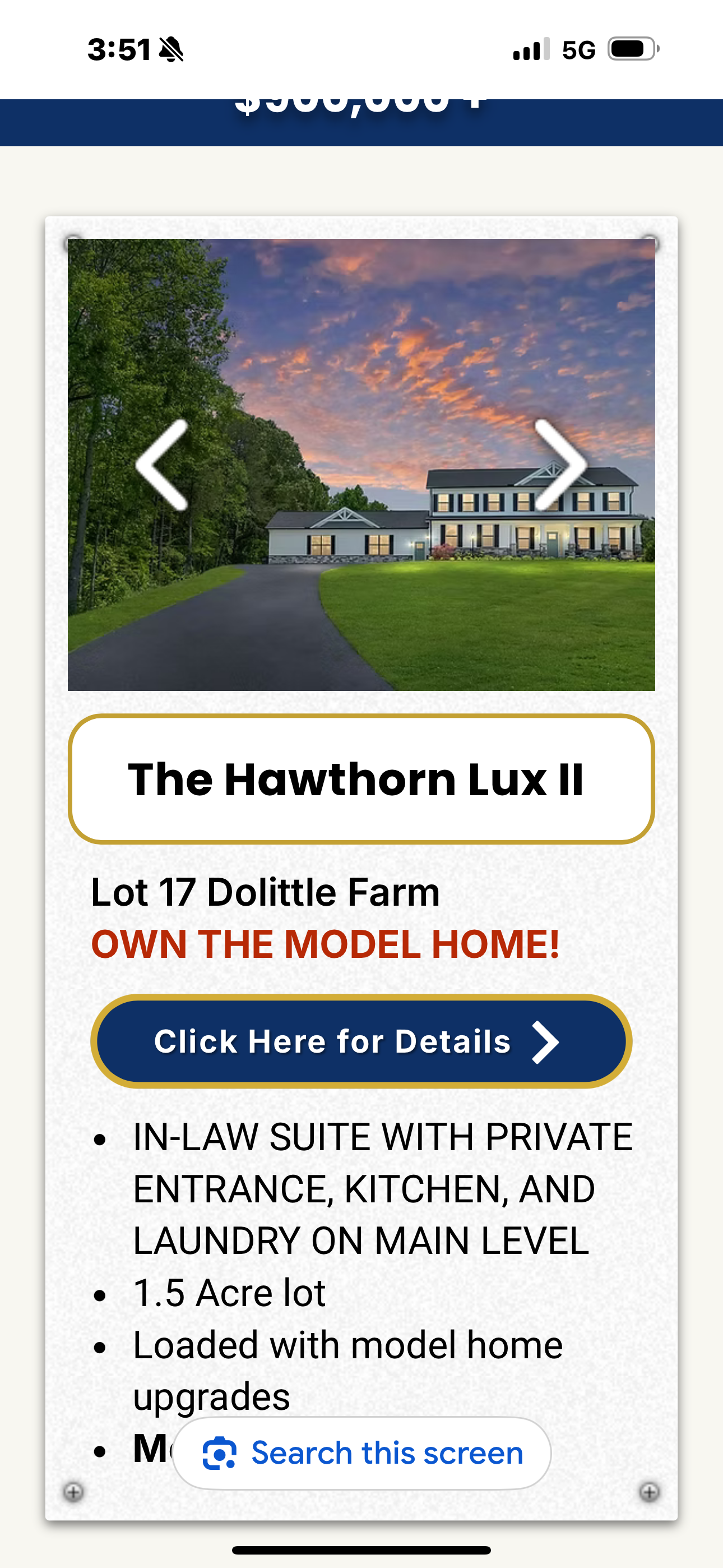
Each installment of this series spotlights a builder active in the market, and this week it is Drees Homes. A national semi-custom homebuilder with a long history and an established presence in Northern Virginia, Drees is a name worth knowing for the middle path it offers: more design flexibility than a typical production builder, with the purchasing process and community structure of an established national company. On Barbara Jennings' local builder list, Drees appears as active in Stafford, Prince William, and the greater Fredericksburg area.
What sets Drees apart is its semi-custom approach to floor plans. Rather than a fixed lineup of identical homes, buyers work within flexible, thoughtfully designed plans and can reconfigure elements to fit how they cook, work, and entertain. That flexibility extends through a design center where selections are guided by a consultant, which is also where budget discipline matters most, because more choices means more room to spend. Set an upgrade budget per category before the appointment and prioritize kitchens, baths, and structural changes.
Build quality is a fixture of the brand's reputation, and buy-side expectations are the same for any semi-custom builder: schedule a pre-drywall inspection, a final walkthrough, and an 11-month warranty inspection before Virginia's standard one-year workmanship coverage rolls off. Typical to-be-built timelines run roughly 7 to 12 months depending on the floor plan and design selections, so confirm the estimated delivery date in writing. As with any builder, ask what incentives apply to the current phase, whether any require the preferred lender, and get every dollar in writing before you sign.
If Drees' flexible floor plans interest you, I am happy to compare it against the semi-custom and production options in your county, put the incentive math in a side-by-side, and walk you through the contract before you commit. Just reach out at (540) 840-1133 and I will take it from there.
What Should You Ask the Builder About Incentives Before You Sign?
A strong incentive conversation protects you at every stage. Walk into the sales office with these questions, and get the answers in writing:
- What is the exact dollar value, and in what form? Closing credit, rate buydown, design allowance, or combination, and what each is worth at closing.
- Does it require the builder's lender? And what, if anything, remains if you use your own financing.
- Are there conditions or deadlines? Whether the offer applies only to specific homes, phases, or a limited window, and what happens if the delivery date slips.
- Does the base price stand on its own? Whether asking for a larger incentive affects the price you would otherwise negotiate, so you compare like for like.
- Where does the value appear on the closing disclosure? Confirm how the credit or buydown is documented so there are no surprises at the table.
Frequently Asked Questions
Equal Housing Opportunity
Barbara Jennings, REALTOR® with eXp Realty (VA license 0225179074), is committed to compliance with all federal, state, and local fair housing laws. She does not discriminate against any person because of race, color, religion, sex, national origin, familial status, disability, or any other protected class.
Questions About a Builder Incentive on Your Home?
I would love to help you decode an incentive offer, run the all-in cost, and make sure you keep the best deal from contract to closing. Call (540) 840-1133 or schedule a free consultation, and let's read the fine print together before you commit.
Barbara Jennings is a licensed Virginia REALTOR® with eXp Realty who specializes in new construction, builder negotiations, and the Fredericksburg-area market. For more on her approach, the communities she covers, and the full range of services she offers, visit her main site at barbara-jennings.com.

Barbara Jennings
REALTOR® · eXp Realty · VA License 0225179074
Barbara Jennings is a licensed Virginia REALTOR® with eXp Realty, VA license 0225179074, specializing in new construction, builder negotiations, and the Fredericksburg-area market. She helps buyers compare incentive offers, understand builder contract terms, and evaluate financing packages so they keep the best deal from the first visit to closing day. Barbara serves Fredericksburg, Stafford, Spotsylvania, Orange, Fairfax, Prince William County, and beyond.
Preferred Lenders
Questions about financing a new construction home? Connect with our preferred lenders for guidance.

Mike Sanchez
Guaranteed Rate
NMLS #860048
Ken Melendez
Guaranteed Rate
NMLS #2037924Learn more about both lenders, how to reach them, and how they help new construction buyers on the Preferred Lenders page.