
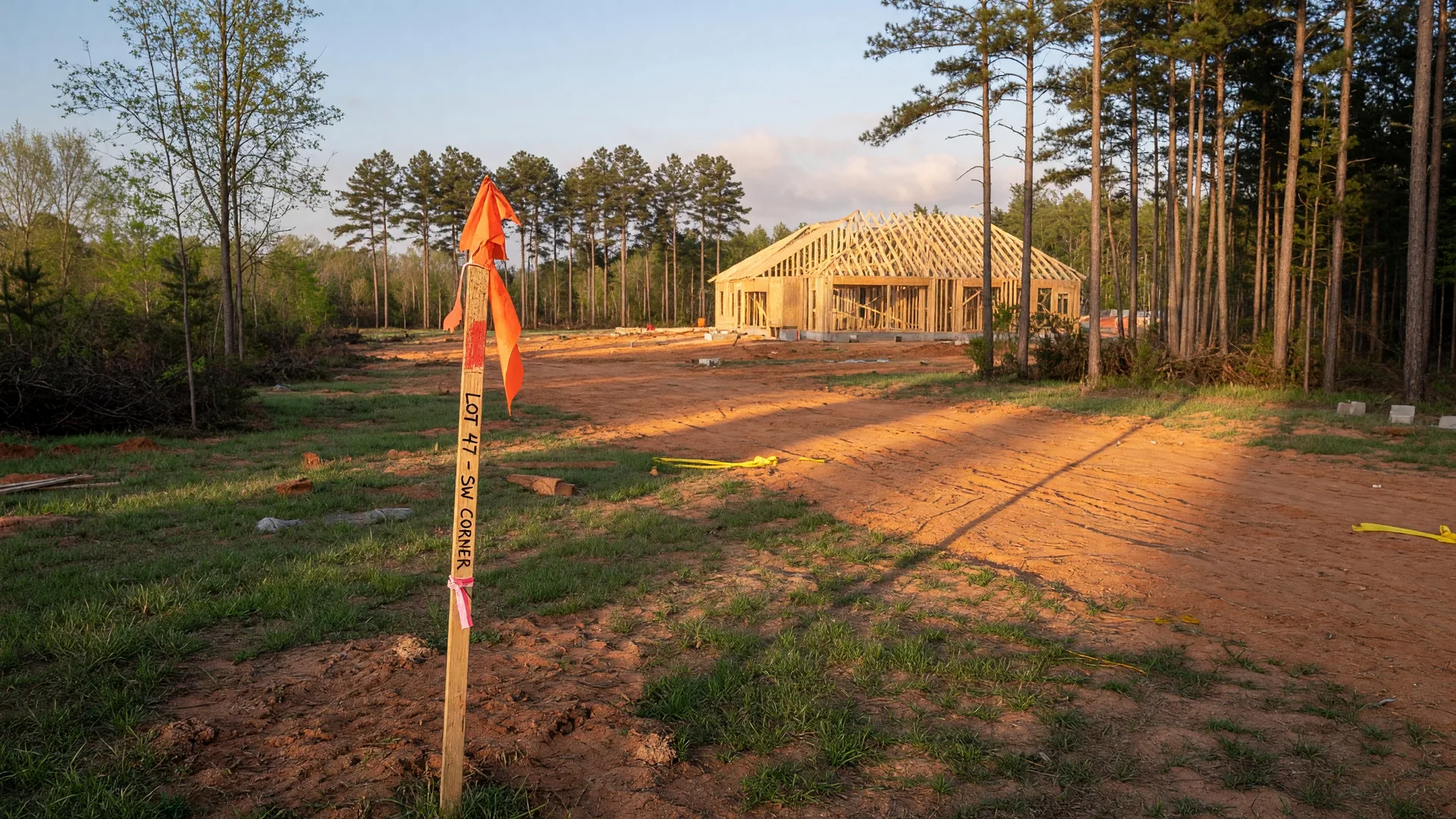
When buyers start the new construction process, most of the attention goes to floor plans, finishes, and the design center. And that makes sense — those are the things you'll see and touch every day. But there's a decision that comes before all of those, and it's one of the most important you'll make: which lot do you choose?
The lot you select determines your home's orientation to the sun, your privacy from neighbors, whether you can have a walk-out basement, how much yard you'll maintain, your daily commute route, and — in many cases — your resale value years down the road. In the Fredericksburg, Stafford, Spotsylvania, Orange, Fairfax, and Prince William County area, where topographies range from rolling hills to wooded flatlands to riverfront properties, lot selection carries even more weight than it does in a uniformly flat subdivision.
Over the years, I've walked dozens of new construction communities with buyers, standing on empty lots trying to imagine the home that will go there. I've seen buyers make brilliant lot choices that they love for years — and I've seen buyers overlook details that end up costing them thousands in regrets. Here's my complete guide to choosing the right homesite in Virginia, from lot premiums to sun orientation to the questions most buyers forget to ask.
What Is a Lot Premium and How Does It Work?
Let's start with the term you'll hear most often in the sales center: lot premium. A lot premium is an additional charge the builder adds to the base price of your home for a specific homesite. It's not a hidden fee — it's a standard pricing practice in new construction communities where lots have different values based on their features.
Think of it like real estate pricing anywhere: a waterfront lot is worth more than an interior lot. A corner lot with extra frontage is worth more than a standard lot in the middle of a row. A lot backing to protected open space is worth more than one backing to a busy collector road. The lot premium is simply the builder's way of reflecting those differences in the price.
Typical Lot Premiums in the Virginia Market
Standard interior lot
$0 to $5,000 — the baseline price included in the base home price. Most communities have a few of these available, and they're often the most affordable option.
Corner lot
$5,000 to $15,000 on production homes; $20,000 to $50,000+ in luxury communities. Corner lots offer extra frontage and more natural light but also mean more sidewalk maintenance and less privacy on one side.
Cul-de-sac lot
$3,000 to $15,000. Quieter, less traffic, and often a larger, pie-shaped lot with more yard space. The trade-off: farther from the community entrance and less convenient for quick errands.
Lot backing to woods or open space
$5,000 to $25,000. This is one of the most popular premium features. Homes backing to trees, green space, or a pond offer privacy and a natural backdrop that no neighbor can build on.
Walk-out basement lot
$10,000 to $30,000+. In the rolling terrain of Stafford and Spotsylvania, lots with a slope that allows a walk-out basement are highly desirable. A finished walk-out basement adds significant living space and resale value.
Premium view lot (water, mountain, or skyline)
$20,000 to $144,000+ in high-demand Northern Virginia communities. Lots with unobstructed views are the most expensive and hold their value best.
Lot premium ranges are approximate and based on current market conditions across the Fredericksburg and Northern Virginia corridor. Actual premiums vary by builder, community, and specific lot features. Always ask the builder for a written lot pricing sheet that shows the premium for every available homesite.
Why Lot Orientation Matters More Than You Think
One of the most overlooked factors in lot selection is the home's orientation on the lot — specifically, which direction the front of the house faces. This affects everything from your morning coffee spot to your utility bills.
Southern Exposure
The most desirable orientation in Virginia's climate. A south-facing home gets consistent natural light throughout the day, and the south-facing roof is ideal for solar panels. In winter, the low southern sun helps warm the house naturally, reducing heating costs. In summer, proper roof overhangs shade the south-facing windows.
Eastern Exposure
Great for morning people. The front of the house gets bright morning sun, and the west-facing rear stays cooler in the afternoon. This is a good option if you have a deck or patio in the back that you want to use in the late afternoon without excessive heat.
Western Exposure
The hottest orientation. The front of the house gets intense afternoon sun, which can raise cooling costs significantly in Virginia's humid summers. If you choose a west-facing lot, consider investing in higher-efficiency windows, quality blinds, and shade trees on the west side of the home.
Northern Exposure
The coolest, most consistent light. The front of the house gets no direct sun, which keeps the entryway cooler. The rear (south-facing) gets the most usable light. This orientation is popular in warmer climates, but in Virginia it means the front of the house can feel chilly in winter.
My advice: Visit the lot at different times of day before you commit. Stand on the lot at 9 a.m., noon, and 4 p.m. to see where the sun falls. Think about where your living room, kitchen, and primary bedroom windows will be in the floor plan — and how much natural light you want in each of those rooms. Also consider the location of the garage: a west-facing garage means your car bakes in the afternoon sun every day you're not driving it.
Privacy: What You Can Control and What You Can't
Privacy is one of those things that's hard to evaluate from a plat map or a lot marker. You need to stand on the actual lot — and picture the home that will be built on the lot next to it — to understand how much visual and sound privacy you'll have.
Here's what I look for with my buyers:
-
Window alignment with neighbors
Check where your side windows will line up with your neighbor's windows. If the builder's floor plans place a large living room window on your side and a bedroom window on the neighbor's side, you'll have direct sight lines into each other's homes. Some builders offer offset floor plans or side-yard setbacks to address this — ask about it.
-
Existing tree buffers
Mature trees between lots are gold. A row of established pines, oaks, or maples provides instant privacy that a new sapling won't deliver for 10 to 15 years. Lots that back to wooded conservation areas or community green space are the most private of all because no one can ever build behind you.
-
Proximity to community amenities
Lots directly next to the community pool, playground, or clubhouse may have more noise and traffic. On the flip side, lots at the far end of a quiet cul-de-sac offer the most peace and quiet. Walk the community on a weekend afternoon to get a realistic sense of the noise level.
-
HOA fencing and landscaping rules
Before you fall in love with a lot, check the HOA's rules on fencing. Some communities allow only specific types of fencing (or none at all), and some have setback requirements that limit where you can place a fence. If privacy is critical to you, make sure the community allows a fence that will actually provide it.
Walk-Out Basements: The Virginia Advantage
If you're building in the rolling terrain of Stafford or Spotsylvania County, you may have the opportunity to choose a lot that allows for a walk-out basement — a basement that opens directly to the backyard at grade level rather than being fully below ground. This is one of the most valuable features you can have in a Virginia home, and it starts with the lot you choose.
A walk-out basement transforms what would otherwise be a dark, below-grade space into a bright, usable living area. With a walk-out, you can add a home theater, a guest suite, a home gym, a playroom, or even a separate apartment with its own entrance. Finished walk-out basements consistently recoup 70% to 80% of their cost at resale, and they're one of the first things buyers ask about when touring a home in this region.
How to Identify a Walk-Out Basement Lot
- → Look for lots that slope downward from the street to the rear property line. The front of the house sits at street level, and the back opens to grade.
- → Ask the builder for a grading plan or topographic survey of the lot. The site superintendent can tell you whether the slope is sufficient for a walk-out.
- → Visit the lot after a rainstorm to check drainage. A good walk-out lot sheds water away from the foundation naturally.
- → Not every lot in a hilly community can support a walk-out. Some lots have the right slope but the wrong orientation relative to the floor plan. The builder's lot map will typically indicate which lots are walk-out capable.
In communities like Keswick Commons (Atlantic Builders, Spotsylvania), Embrey Mill (Stafford), and the newer phases of Virginia Heritage (Fredericksburg), walk-out basement lots are some of the most sought-after — and they typically command the highest lot premiums. If you're on the fence, I'd encourage you to prioritize the walk-out lot over other upgrades in the home itself. You can always upgrade countertops later, but you can't change the slope of your lot.
Topography, Drainage, and What's Under the Surface
Beyond the obvious features — views, trees, lot size — there are less visible factors that can have a big impact on your experience with the lot. Here's what to check:
Drainage and Water Management
Walk the lot during or after a heavy rain. Where does the water pool? Does it run toward the street or toward the lot's center? Poor drainage can lead to basement moisture issues, even in a brand-new home. The builder should have a drainage plan, but seeing the lot in the rain gives you a real-world picture.
Setbacks and Buildable Area
Every lot has front, side, and rear setback requirements that determine where the house can sit. On a narrow lot, the buildable area may be tight, limiting your choice of floor plans or forcing you into a narrower home. The builder's lot plat should show the setback lines. Ask to see it before you pick a lot.
Tree Preservation and Clearing
Some communities require clearing the entire lot before construction; others preserve natural tree buffers. Find out which trees will stay, which will go, and how the builder handles tree protection during construction. A lot with a beautiful tree canopy can lose half its appeal if the construction process damages the root systems of the remaining trees.
Soil and Percolation
In communities that are not on public sewer (some larger acreage lots in Spotsylvania and Orange County), the soil must pass a percolation test for a septic system. If the soil doesn't perc, the lot may not be buildable with a conventional septic system, which could limit the type of home you can build. Ask the builder whether the lot has been tested and approved for septic.
Position Within the Community: Where Should You Be?
The location of your lot within the broader community matters just as much as the lot itself. Here's a framework for evaluating community position:
Near the Community Entrance
Convenient for quick trips to the store, school, or work. You'll spend less time driving through the neighborhood. The trade-off: more traffic noise, less privacy, and more headlights shining into your windows at night.
Deep in the Community
Quieter, more private, and less through traffic. Kids can play more safely. The trade-off: longer drive to the entrance, and in a large master-planned community like Embrey Mill or Virginia Heritage, it can take 5 to 10 minutes just to get out of the neighborhood.
Near Community Amenities
Walking distance to the pool, clubhouse, or playground can be a huge lifestyle benefit, especially for families with kids. The trade-off: noise, parking congestion during events, and potential light pollution from the amenity area.
Adjacent to Future Phases
If your lot borders an area that will be developed in a future phase, expect several months to years of construction noise, dust, and heavy equipment nearby. Ask the builder for the development timeline so you can plan accordingly.
Lot Spotlight: What's Available in the Region Right Now
Here's a snapshot of what's happening in the Fredericksburg-area new construction market as of mid-2026, with a focus on lot availability and the types of homesites you'll find in each area:
Stafford County
Stafford remains the busiest new construction market in the region. Embrey Mill (North Stafford) is a standout 819-acre master-planned community with lots from multiple builders — Miller & Smith, Drees Homes, and Brookfield Residential — offering everything from townhomes to luxury single-family homes. The new Cascades at Embrey Mill 55+ section opens this year with luxury townhomes and elevator flats. For acreage, Christy Reserve in western Stafford offers 3 to 11+ acre private lots, and Colebrook Estates in Falmouth has twelve 1-acre homesites within 10 minutes of downtown Fredericksburg.
Spotsylvania County
Spotsylvania's growth is concentrated along the Route 3 and Route 17 corridors. Keswick Commons (Atlantic Builders) is a major new community with a pool, clubhouse, parks, playgrounds, soccer field, tennis courts, and walking trails — and lots that back to wooded conservation areas. Keswick (Richmond American Homes) offers ranch and two-story floor plans from the mid-$600s. For luxury, Fortunes Landing features large 4+ acre estate lots with homes under construction and summer 2026 completions.
Fredericksburg City
Infill and redevelopment continue to drive new construction in the city. Virginia Heritage continues to expand with new phases — this is one of the region's largest master-planned communities with active adult and all-ages sections. Lot premiums here tend to be higher because of the established amenities and proximity to I-95.
Prince William County
Higher price points driven by proximity to Washington DC. New communities from Ryan Homes, Stanley Martin, and Atlantic Builders offer townhomes and single-family homes. Lot premiums tend to be steeper here, and the lots themselves are typically smaller than what you'll find in Spotsylvania for the same price.
Community information is current as of mid-2026. Lot availability changes rapidly as new phases open and sell out. Contact me for the most current lot inventory and pricing in any community.
Your Lot Selection Checklist
Here's a practical checklist to take with you when you visit a new construction community and evaluate lots. I give this to every buyer I work with:
Before You Visit the Community
- → Research the community's location — commute time, schools, shopping, medical facilities
- → Check the HOA rules on fencing, landscaping, and exterior modifications
- → Review the builder's lot map online if available
- → Define your budget range including potential lot premiums
- → Make a list of must-haves: walk-out basement? Privacy? Cul-de-sac? Acreage?
At the Community
- → Walk the specific lot — not just drive by it
- → Visit at different times of day (morning, afternoon, evening)
- → Check the sun orientation and where the windows will be
- → Look at the neighbor's house plans — where are their windows in relation to yours?
- → Walk the lot after a rain to check drainage
- → Listen for road noise, train noise, or other ambient sounds
- → Check the distance to the nearest streetlight (affects bedroom brightness at night)
- → Ask about future development — what will be built on the empty land next door?
- → Get a written lot premium sheet showing the price of every available lot
- → Ask about the build timeline for your specific lot (when will construction start and finish?)
Questions to Ask the Builder's Sales Agent
- → Can I see the grading plan and site survey for this lot?
- → Is this lot walk-out basement capable? If so, what's the premium?
- → Which trees will be preserved during construction?
- → Are there any utility easements on the lot that limit where I can build or landscape?
- → What's the timeline for the next phase of development behind or beside this lot?
- → Is the lot premium negotiable, or is it firm?
- → Can I reserve the lot now and choose my floor plan later?
Can You Negotiate a Lot Premium?
The short answer: sometimes. Lot premiums are not always set in stone, especially if you're flexible on which lot you choose. Here's what I've seen work in the Fredericksburg market:
- Ask for a premium reduction, not elimination. Builders are more likely to reduce a $15,000 premium to $10,000 than to waive it entirely. They want to show that every lot has value.
- Bundle it with other incentives. If the builder won't budge on the lot premium, ask for a design center credit, closing cost assistance, or a rate buydown instead. The total value of your package matters more than the line item.
- Every lot is a premium lot. Some builders label every lot with a premium, even standard interior lots. Ask for a breakdown of what you're paying for and whether there are lots available with no premium — sometimes those are the best value of all.
- Work with a buyer's agent. I've negotiated lot premium reductions for my clients that the builder's own sales agent couldn't offer. Having someone who knows the market and the builder's incentive structure can make a real difference.
The Bottom Line: Your Lot Is Your Home's Foundation
Choosing the right lot is one of the most consequential decisions you'll make in the new construction process. It affects your privacy, your energy bills, your outdoor living space, your ability to finish a basement, and your home's long-term resale value. Unlike a countertop you can replace or a paint color you can change, your lot is permanent — the home sits where it sits, and the lot is what it is.
The good news is that across the Fredericksburg, Stafford, Spotsylvania, Orange, Fairfax, and Prince William County area, you have a remarkable range of lot options. Whether you want a quiet cul-de-sac in a family-friendly community, a wooded acreage lot with privacy and space, a walk-out basement lot with a view of protected green space, or a low-maintenance villa lot with lawn care included, there's a homesite out there that fits your lifestyle.
The key is to take your time, walk the lots in person, visit at different times of day, and ask the right questions before you commit. And having an experienced buyer's agent who knows the local communities — the lot premiums, the grading quirks, the future development plans — can make all the difference between a choice you're happy with and one you wish you'd made differently.
"The lot is the one thing you can't change. I help my buyers look past the survey stakes and imagine the home, the yard, the sunlight, and the life they'll build there — before they make a single decision about countertops or cabinets."
— Barbara Jennings
Want the full buying roadmap to go with this lot guide? The New Construction Buyer Guide walks through financing, builder incentives, the design center, contracts, and closing, step by step.
When Barbara isn't helping families find their new construction home in Virginia, she's sharing the latest insights on building and buying across the Fredericksburg region. Learn more at barbara-jennings.com.
Ready to Find the Perfect Lot for Your New Home?
I'll help you evaluate lots across the Fredericksburg region — from walk-out basement sites to private acreage — and find the homesite that's right for you. Contact me today for a free consultation.

Barbara Jennings
REALTOR® · eXp Realty · New Construction Specialist
Barbara Jennings is a licensed Virginia REALTOR® with eXp Realty, specializing in new construction, builder negotiations, and the Fredericksburg-area market. With her proven 100-point Marketing Plan and advanced AI-driven strategies, she helps buyers find the right lot, the right builder, and the right home at the right price.