
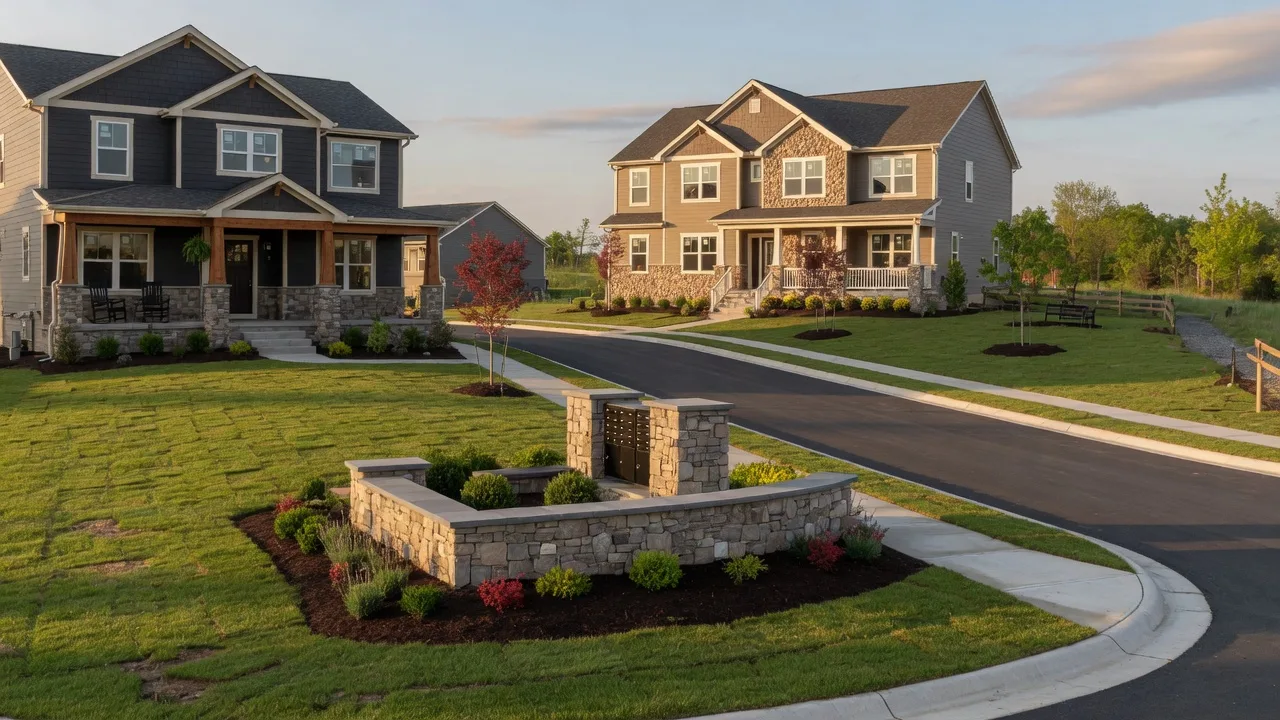
HOA fees in new construction communities in Virginia typically run about $100 to $200 per month for a single-family home and roughly $150 to $300 per month for a townhome, though the exact amount varies widely by community, builder, and amenities. Before you fall in love with a model home or add a monthly fee to your budget without thinking it through, it helps to understand what that money pays for, when it starts, and why some communities layer on extra assessments. As a new construction specialist serving Fredericksburg, Stafford, Spotsylvania, Orange, Fairfax, and Prince William County, I have walked buyers through these numbers more times than I can count, and I want to make them easy to understand from day one.
An HOA, or homeowners association, is a nonprofit organization that manages the common areas and shared rules of a community. In brand-new developments, the builder typically creates the HOA, sets the initial budget, and enforces the covenants while the community is still filling up. Once a certain percentage of homes are sold, control usually transitions to a board made up of the homeowners themselves. That monthly fee you see quoted in the sales office is how the whole thing gets funded.
How Much Are HOA Fees in New Construction Communities in Virginia?
It is impossible to quote one price for the whole region, because no two communities are alike. But here are the real ranges I see across our service areas, based on active new construction communities and recent listings in the Fredericksburg and Stafford corridor. Treat these as planning numbers, then verify the exact figure for the specific community and lot you are considering.
Single-Family Homes
Roughly $100 to $200+ per month. Single-family communities usually maintain private yards, so the fee typically covers common spaces, entrance landscaping, and community amenities rather than your lawn.
Townhomes
Roughly $150 to $300 per month. Townhome fees run higher because the association often covers shared exterior maintenance, roof, siding, and common grounds, not just amenities.
Regional Median
The median monthly HOA or condo fee in the Fredericksburg and Stafford metro is around $200, with most homes falling between roughly $124 and $360 per month depending on the property type.
Resort-Style Amenities
Master-planned communities with pools, clubhouses, trails, fitness centers, and full-time staff tend to sit at the higher end of these ranges, sometimes well above $200 a month.
What Do New Construction HOA Fees Actually Cover?
New construction HOA fees are not arbitrary. In a brand-new community they fund the things that keep the neighborhood looking and running the way it does on the day you move in. Here is what the fee generally pays for.
Common Area Upkeep
Landscaping and mowing of entrances, medians, parks, and trails; streetlight maintenance; and community signage so the neighborhood keeps its polished look.
Amenities & Facilities
Pools, clubhouses, fitness centers, playgrounds, and sports courts, including the utilities, staffing, insurance, and repairs they need to stay usable.
Shared Maintenance
For townhomes and condos, this includes exterior building upkeep, roofs, siding, driveways, and sometimes community snow removal and repaving.
Reserves & Administration
A portion goes to a reserve fund for big future repairs, plus management fees, insurance, and the association's operating expenses.
Why Are Townhome HOA Fees Higher Than Single-Family Fees?
This is the question I hear most often on model home tours. It comes down to responsibility. In a single-family community, you mow your own lawn and maintain your own exterior, so the HOA mostly covers shared spaces. In a townhome community, the association is often responsible for the building envelope, roof, siding, exterior paint, and sometimes even the driveway and walkways. Managing a whole building, not just a strip of grass, costs more, and that is the honest reason townhome fees sit higher. In exchange, you trade a good chunk of exterior maintenance, which many buyers, especially empty nesters and commuters, genuinely value.
There Can Be an Extra Assessment: The CDA Example in Stafford
Here is a detail that surprises a lot of buyers. Some larger master-planned communities are built with public infrastructure that is funded by a Community Development Authority, or CDA, which charges a separate special assessment on top of the regular HOA fee. It is billed alongside property taxes, usually semi-annually, and it pays for roads, utilities, and public improvements in the community.
Embrey Mill in Stafford is a great local example. It has both an HOA and a CDA special assessment. The HOA runs roughly $115 to $200 per month depending on the property, and the CDA adds a separate payment of roughly $1,055 per year for townhomes and about $1,627 per year for single-family homes, as of recent tax years. When you add those together, the true monthly carrying cost is higher than the HOA number alone that gets quoted in the sales center. Not every community has a CDA, but where one exists, letting it slip through your budget is an easy way to be surprised at closing.
Ask These Questions About Extra Fees
- → Is there a CDA or special assessment in this community, and how much does it add per year?
- → How often is the special assessment billed, and for how many years is it expected to continue?
- → What percentage of homes are sold, and when does homeowner control of the HOA begin?
- → How was the current HOA fee set, and what is included versus not included in the base fee?
- → Are there planned increases during the first few years as the community fills up?
How Do HOA Fees Affect Your New Construction Financing?
HOA fees affect your monthly payment in two ways. First, most lenders include the HOA fee in your debt-to-income ratio when they qualify you for a loan, so a higher fee can reduce how much home you can comfortably afford. Second, the fee is a real ongoing cost that should be built into your household budget alongside your mortgage, property taxes, and insurance. When you compare two communities, look at the all-in monthly cost, HOA included, not just the sticker price of the home.
Ask your lender how your specific loan program treats HOA fees. Some programs are more flexible than others on how they calculate recurring association costs. And when you get a loan pre-approval, tell your lender which community you are considering so they can qualify you with the real fee, not a guess.
A Buyer's Checklist for Evaluating HOA Fees Before You Close
A low HOA fee is not automatically a better deal, and a high one is not always a red flag. What matters is value: does the fee pay for things you will actually use, and is it enough to properly maintain the community over time? Here is my checklist.
Get the fee in writing, in the full picture.
Ask the builder for the current monthly HOA fee, the CDA or special assessment if there is one, and the association budget. Add them together to find the true monthly carrying cost for the exact property type and lot you want.
Review the CC&Rs before you sign.
The Covenants, Conditions, and Restrictions outline the rules you agree to live by, plus how fees are set and can be raised. Whether you can have a shed in the backyard, park a boat on the street, or run a home business may all be governed here. Make sure the rules fit your lifestyle.
Understand what resale buyers will pay later.
A high fee can affect your home's resale appeal, especially in some price brackets, but so can a neglected community. A well-run HOA that keeps common areas beautiful often supports your value in the long run. Think of the fee as part of the total cost of ownership, not an isolated expense.
Check for community builder incentives.
In today's market, builders across Virginia often offer incentives like closing cost assistance or rate buydowns. When you are weighing a community with a slightly higher HOA, ask what incentives are on the table, because a strong incentive package can more than offset the difference in some cases.
Bring your buyer's agent from the first visit.
Builder sales representatives work for the builder. Your own buyer's agent reviews the HOA documents, compares fees across communities, and negotiates on your behalf at no cost to you. Register your agent on your first tour so you have representation through every step.
The Bottom Line on HOA Fees
An HOA fee is not a surprise you should discover at closing, and it is not a reason to avoid a community you love. It is simply a line item you need to understand before you sign. The right approach is to look at the full picture, HOA, CDA, special assessments, incentives, and all, and decide whether the community's amenities and standards make the total cost feel fair to you. When you know the numbers going in, you make a confident decision instead of an anxious one.
"The HOA fee is the detail that quietly gets overlooked until it shows up in every monthly payment you make. When a buyer knows the real number before they sign, they walk into the home they love without surprises, and that is the whole point of preparation."
Barbara Jennings
When Barbara isn't helping families find their new construction home in Virginia, she's sharing the latest insights on builders, communities, and the true cost of buying. Learn more at barbarajennings.com.
Still Unsure About HOA Fees for Your New Construction Home?
Every community is different, and the right answer for your family depends on your budget and lifestyle. Contact me today for a free consultation, and I will help you compare communities and the true cost of each before you decide.

Barbara Jennings
REALTOR® · eXp Realty · New Construction Specialist
Barbara Jennings is a licensed Virginia REALTOR® with eXp Realty, specializing in new construction, builder negotiations, and the Fredericksburg-area market. She helps buyers in Orange, Spotsylvania, Stafford, Fredericksburg, Prince William County, Fairfax County, and beyond find the right home at the right price, and save thousands in the process.
Stay Connected
Get new construction guides, market updates, and community spotlights from Barbara Jennings.
Schedule a New Construction Consultation